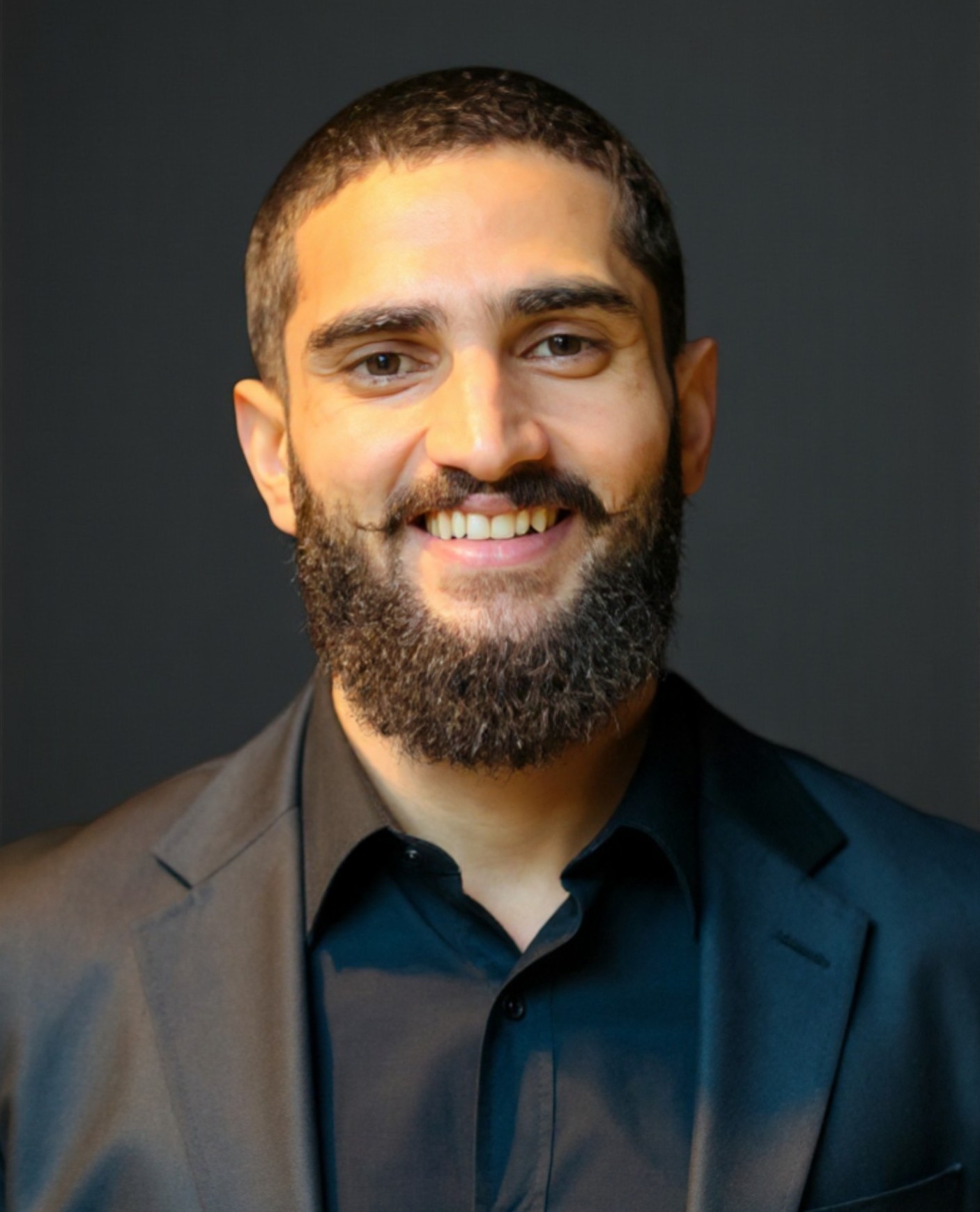
Abdul Sami Janjua
Abdul Sami Janjua is the CEO and Co-Founder of Ferio Solutions, a company he has built from the ground up while expanding into international markets. His hardest-won insight is that hard work alone is not enough: you also have to communicate your value, build the right relationships, and direct your effort deliberately. Without those layers, even exceptional work can go unrecognized.
From questioning every small detail of a conversation after a long day to holding himself to standards that the people around him rarely see, Abdul Sami Janjua's story is one of quiet self-examination running beneath a confident exterior. In this interview with Powerful Blueprints, Abdul Sami explores what building Ferio Solutions has genuinely cost him in assumptions, the beliefs he had to discard, and why the gap between looking successful and building something meaningful matters more to him than most metrics ever will. Good morning, Abdul Sami Janjua!
What is the first thing an aspiring entrepreneur needs to hear that no professor will say?
Abdul Sami Janjua advises aspiring entrepreneurs to stop waiting for the perfect time to start, arguing that preparation comes largely from the act of building itself, not from planning before it.

I would tell them to stop waiting for the perfect time to start.
When I was starting out, I didn't have everything figured out. I was learning while doing, dealing with clients, figuring out how to build the right team, handling problems I had never dealt with before, and making decisions where there wasn't always an obvious right answer. Starting Ferio Solutions taught me that you don't become prepared first and then start; a lot of the preparation comes from actually being in the situation.
One thing I wish I had understood earlier is that having an idea is the easy part. Turning it into something people are willing to trust, pay for, and come back to is where the real work begins.

So I'd tell a student: start with what you have, take the first step seriously, and don't be embarrassed by the things you don't know yet. You will learn a lot faster once you are actually building something.
What deeply held belief about business or yourself turned out to be completely wrong?
Abdul Sami Janjua held for years that hard work would speak for itself, and building Ferio Solutions forced him to confront the limits of that belief, teaching him that communication and relationship-building are just as essential as the work itself.
For a long time, I believed that if you worked hard enough, people would automatically recognize your effort and things would eventually work out. I thought doing good work would speak for itself.

Building a company changed that belief.
I learned that hard work matters, but it is not enough on its own. You also have to communicate, build relationships, make difficult decisions, and sometimes put yourself in uncomfortable situations. There were times when I was focused so much on getting the work done that I underestimated how important it was to explain the value behind that work and make sure the right people understood it.
I still believe strongly in hard work, but I see it differently now. Hard work gives you the foundation. What you do with it, how you communicate it, where you direct it, and who you build with determines what comes from it.

That was probably one of the biggest shifts in how I think about business and myself.
What lessons in life took Abdul Sami Janjua the longest to learn?
Abdul Sami Janjua's longest-running lesson has been learning to relinquish control, trust his team, and accept that delegation is not a loss of quality but a prerequisite for real growth.
One of the lessons that took me the longest to learn was that you cannot control everything, no matter how much you care about the outcome.
When I started building Ferio Solutions, I often felt that if I stayed involved in everything and tried to make sure every detail was right, things would move faster and turn out better. Over time, I realized that approach has limits. You can work harder, but you cannot personally carry every responsibility as a company grows.
I had to learn to trust people, delegate, communicate clearly, and accept that sometimes someone else will do something differently than I would. That was difficult for me because letting go can feel like losing control.
Eventually, I understood that real growth is not about doing everything yourself. It is about building people you can trust and giving them enough responsibility to grow with you.
That lesson has changed the way I lead more than almost anything else.
What is the one thing Abdul Sami Janjua believes deeply that most people aren't saying out loud?
Abdul Sami Janjua believes society places too much pressure on people to appear successful before they have had the chance to genuinely figure themselves out, and that the difference between looking successful and building a life you are proud of is rarely acknowledged.
I think we put far too much pressure on people to look successful before they have had the chance to figure themselves out.
We see someone's position, company, money, or achievements and assume we understand their life. But we rarely see the uncertainty, mistakes, doubts, or years of work behind it. I've learned this through building my own career and company. From the outside, progress can look much more straightforward than it actually feels when you're the person living through it.
I also think people need to be more comfortable admitting that they don't have everything figured out. I certainly don't. Building a company has taught me that you can be confident in where you're going while still having a lot to learn.
If I could say one thing to the world, it would be this: don't confuse looking successful with actually building a life you are proud of. The two can look very different, and I think the second one matters much more.
What does Abdul Sami Janjua say gets lost between who he is and how he comes across?
Abdul Sami Janjua says his focused, composed exterior often leads people to mistake him for someone who has everything figured out, when in reality he experiences doubt, changes his mind, and is still actively learning.
I think people sometimes get the wrong impression of me because I'm very focused when I'm working. When I have something I'm responsible for, I tend to take it seriously, and that can make me come across as more serious or confident than I actually feel inside.
Building Ferio Solutions has made me realize how different the person making decisions can feel from the person people see making them. There have been plenty of moments where I've had to make a decision without knowing for certain whether it was the right one. I've had doubts, changed my mind, and learned things the hard way, just like anyone else.
I'm also much more willing to listen than people might expect. I don't always react immediately or say everything I'm thinking, but I pay attention.
I think people often mistake being composed for having everything figured out. I definitely don't. I'm still learning, still making mistakes, and still trying to become better at what I do.
What daily habit of Abdul Sami Janjua's would surprise the people around him?
Abdul Sami Janjua spends a significant portion of each day quietly thinking about small details, from individual conversations to whether a process could have run better, a habit rooted in his conviction that small things left unexamined eventually become large problems.
One thing I do every day that probably surprises people is that I spend a lot of time thinking about things that most people would consider small.
When you're building a company, it's easy to focus only on the big things, clients, growth, hiring, and the next target. But I've learned that a lot of the real work is in the details. I'll think about a conversation I had with someone, whether a process could have been handled better, how a team member is doing, or why something didn't go the way I expected.
I don't always talk about those thoughts with people. A lot of it happens quietly, usually when I finally have some time away from everything else.
I think that habit comes from knowing that small things eventually become big things. A small problem ignored today can become a serious problem later, just as a small improvement repeated every day can make a company much better over time.
What did money teach Abdul Sami Janjua about himself that nothing else could?
Abdul Sami Janjua learned through building Ferio Solutions that financial growth does not bring the sense of security he once expected, and that money is more meaningful to him today as a tool for creating opportunity than as a measure of success.
Money taught me that having more of it doesn't automatically make you feel more secure. When I was starting out, I thought reaching a certain level financially would mean I would worry less and feel more in control. Building a company taught me that the reality is different.
As the business grew, I became much more conscious of what money actually represents. It gives you options, but it also comes with responsibility. You have clients depending on you, people depending on the company, and decisions where spending money today can affect what you are able to build tomorrow.
My relationship with money has become less about trying to have more and more about understanding what it allows me to do. I value being able to invest in the company, create opportunities for people, and make decisions based on what is right for the business rather than making every decision purely around short-term income.
I still want to grow financially, of course, but today I see money more as a tool than as a measure of success.
What is Abdul Sami Janjua's one-year goal that he is prepared to be held accountable to?
Abdul Sami Janjua's stated goal for the next twelve months is to meaningfully strengthen Ferio Solutions' presence in the United States and other international markets, while growing as a leader in step with the company's development.
If you check back with me one year from now, I want to be able to say that Ferio Solutions has taken a real step forward internationally, not just in size, but in the quality of the company we have built.
My goal is to significantly strengthen our presence in the United States and other international markets while building the people and systems needed to support that growth properly. I don't want growth that looks good on paper but creates problems behind the scenes.
Personally, I also want to become a better leader during that process. One of the biggest responsibilities of building a company is realizing that your own growth has to keep up with the growth of the business.
So if you hold me accountable to one thing, it would be this: one year from now, I want Ferio Solutions to be a stronger, more established company than it is today, and I want to be a better leader because of the work it took to get there.
Thank you so much for sharing your story with us, Abdul Sami Janjua!
Frequently Asked Questions about Abdul Sami Janjua
Who is Abdul Sami Janjua and what is Ferio Solutions?
As the CEO and Co-Founder of Ferio Solutions, I have spent years building a company from the ground up while learning some of the most important lessons of my career along the way. Ferio Solutions is the company through which I have navigated everything from early client relationships to decisions about international expansion. The experience of building it has shaped how I think about leadership, money, communication, and growth in ways I did not fully anticipate when I started. It is not just a business to me; it is the context within which most of my real learning has happened.
What is Abdul Sami Janjua's core philosophy on hard work and success?
After years of running my own company, I have come to believe that hard work is necessary but not sufficient on its own. I held for a long time that doing excellent work would be recognized automatically, and building a company dismantled that belief entirely. Hard work gives you the foundation, but what you do with it, how you communicate it, where you direct it, and who you build alongside you, determines what actually comes from it. That shift in thinking has probably been one of the most significant evolutions in how I approach both business and my own development as a leader.
What is Abdul Sami Janjua's leadership style and how has it evolved?
When I first started building Ferio Solutions, my instinct was to stay involved in every detail because I cared deeply about the outcome and believed that hands-on involvement would produce better results faster. Over time, I came to understand that this approach has real limits as a company grows, and that carrying every responsibility personally is not sustainable. I had to learn to delegate, trust the people around me, and accept that someone else might approach something differently than I would without that being a problem. Real growth, I now understand, is about building people you can rely on and giving them enough room to grow alongside the company.
What is Abdul Sami Janjua's view on the pressure to appear successful?
Having lived through the gap between how progress looks from the outside and how it actually feels from the inside, I believe we place far too much pressure on people to appear successful before they have had the chance to genuinely figure themselves out. When people see a position, a company, or visible achievements, they rarely see the uncertainty, the mistakes, or the years of unglamorous work that produced those things. I have experienced this directly, and it has made me much more comfortable admitting that I don't have everything figured out. Confusing looking successful with building a life you are actually proud of is one of the most common and costly mistakes I see, and I think saying that out loud matters.
What is Abdul Sami Janjua's relationship with money and how has it changed?
When I was starting out, I believed that reaching a certain financial level would bring a greater sense of security and control, and building a company showed me fairly quickly that this is not how it works. As Ferio Solutions grew, I became more conscious of what money actually represents: options, yes, but also responsibility toward clients, toward the people who depend on the company, and toward the long-term decisions that today's spending makes possible or impossible. My relationship with money has shifted from wanting more of it to understanding what it enables me to do with it. Today I see it primarily as a tool for building, creating opportunities, and making decisions based on what is right for the business rather than short-term income.
What is Abdul Sami Janjua's biggest goal for Ferio Solutions in the next year?
Over the next twelve months, my primary focus is on taking Ferio Solutions forward in a meaningful way internationally, with a particular emphasis on strengthening our presence in the United States and other international markets. Critically, I am not pursuing growth that looks impressive on paper while creating internal problems that undermine what we have built. That means investing in the people and systems that can support real expansion sustainably. Alongside the company's growth, I am also holding myself accountable to becoming a better leader, because I believe a company can only grow as fast as the person leading it is willing to grow themselves.