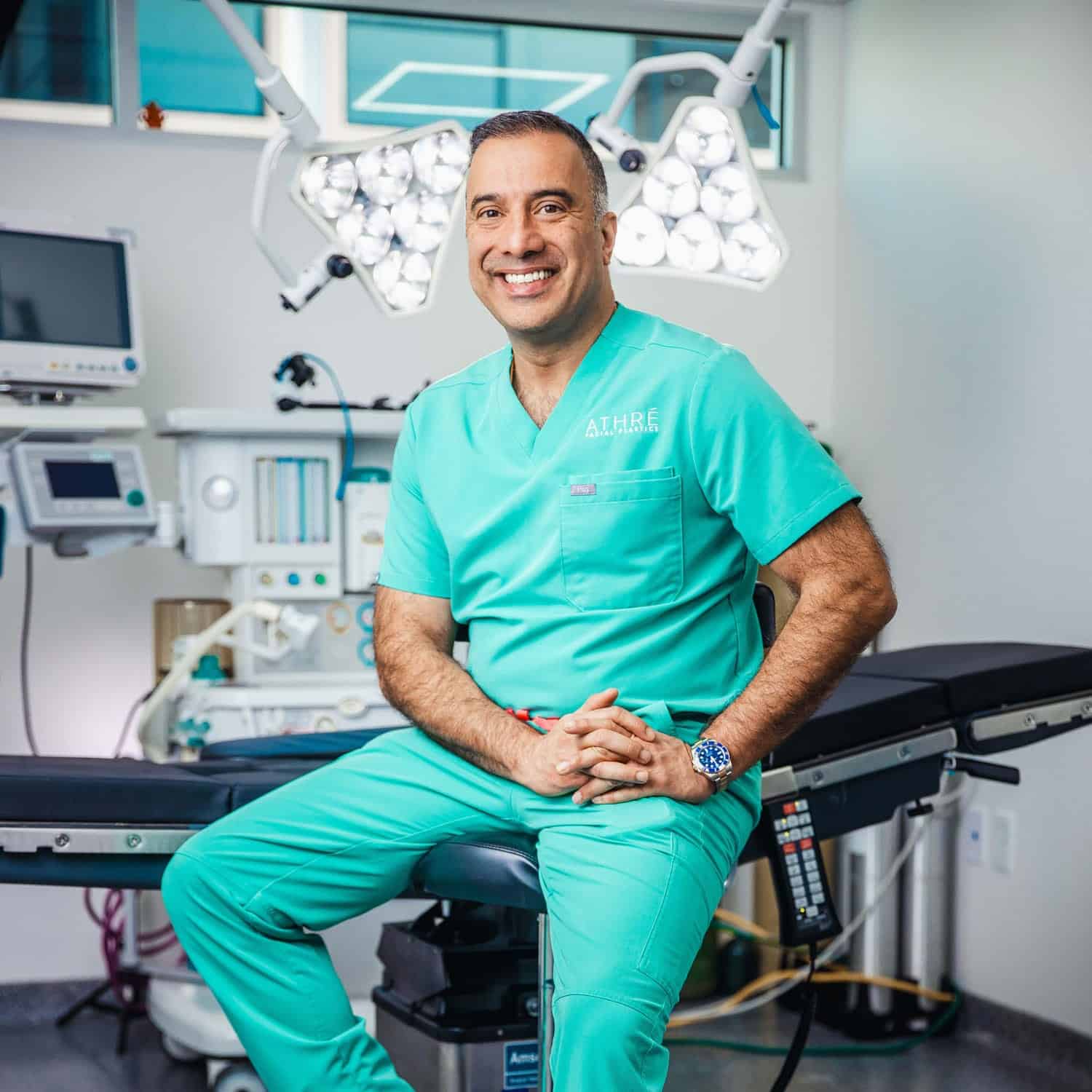
Dr. Raghu Athré
Dr. Raghu Athré is a double board-certified facial plastic surgeon with more than twenty years in practice. His core belief is that the physical result of surgery is not always the whole result: a carefully considered change on the outside can sometimes unlock something that was already present in the patient. He emphasizes that judgment, not technique alone, is what distinguishes experience.
From a consultation room where a shy young woman could barely meet his eye, to the same room months later when she walked in transformed in ways no scalpel directly caused, Dr. Raghu Athré's career keeps returning to the same question: what does a face actually hold? In this interview with Powerful Blueprints, Dr. Raghu Athré talks candidly about the tension between engineering precision and aesthetic judgment, the years it took to trust experience over technique, and the larger idea he is still working to document and share. Some conversations are worth publishing in full. This one with Dr. Raghu Athré is one of them.
What does the hour before surgery require of you?
This is where the real thinking showed up.
Before surgery, I need clarity.
My background is actually in chemical engineering, and I think that still influences the way I approach a face. I analyze. I look at the anatomy, proportions, asymmetries and how all of those pieces relate to one another. I want a precise plan of action, and I want a backup plan.
But there is another side of facial plastic surgery that isn't engineering.
Every face is different. Every patient has aged differently. Every patient has a different idea of what bothers them and what they want to preserve. So I can have a technical plan, but I can't become so attached to the plan that I stop seeing the person in front of me.
What has to be present is focus. What has to be absent is noise.
As for what I'm drinking and what's playing, I'll let you ask me that one again after surgery. I may give you a more interesting answer.
When did you know facial plastic surgery was where you were meant to be?
We were curious how this actually happened.
Facial plastic surgery was actually not where I thought I was headed.
I started as a chemical engineer. My original plan was to go to medical school and eventually return for a PhD in biomedical engineering. Then I went through medical school and fell in love with surgery.
I entered head and neck surgery, which I found incredibly challenging. A couple of years into residency, I discovered that I had a knack for facial plastic surgery and, more importantly, that I really loved it.
It brought two sides of my brain together.
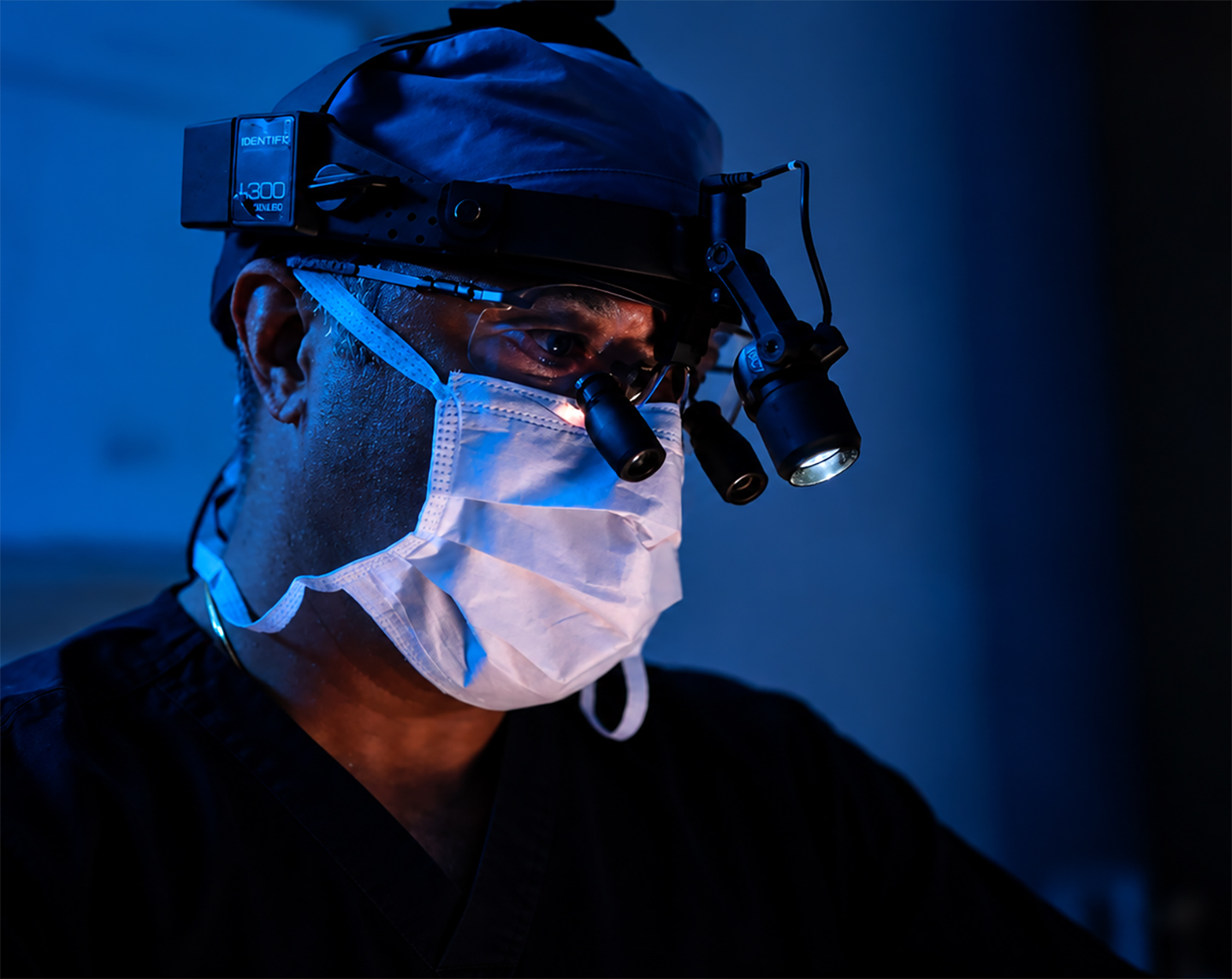
There was the scientific thinking, anatomy, engineering and precision. Then there was aesthetic assessment, proportion and judgment. I loved what happened when those two things smashed together.
I don't remember one dramatic moment when I decided, "This is what I'm going to do." It was more that I looked up and realized I had found something that mentally challenged me and connected deeply with the way I already saw the world.
What is Dr. Raghu Athré trying to say through his work that words have never quite captured?
We wanted the honest version, not the tidy one.
I hear some version of this from patients all the time: "I have all this energy, but the person I see in the mirror doesn't reflect how I feel."
That's the essence of what I do.
I'm trying to bring how you look, how you feel and who you are into one cohesive whole.
That doesn't mean turning someone into a different person. Quite the opposite. I don't want to impose my idea of beauty on a patient. I want to understand what has changed, what bothers them and what makes their face uniquely theirs.
You don't have to become someone else to feel comfortable with your face again.
I don't want someone to look at one of my patients and say, "That's an Athré facelift." I'd rather they see someone who looks rested, healthier, happier, maybe younger, but they can't quite explain why.
Some of the work I'm most proud of is work nobody notices.
Can you walk us through a case that became something you did not expect?
This answer stayed with us.
What has surprised me most about this work is that sometimes a relatively small physical change becomes something much larger in the patient's life.
I remember a young woman who came to me with her mother for rhinoplasty. She was very shy. She looked down during the consultation and didn't carry herself with much confidence.
We did her surgery.
When she returned six to nine months later, I almost felt like I was meeting a different person. She was standing tall. She was smiling. She had this completely different energy. Her mother told me how much her life had changed. She had gone to college, become social and was thriving.
That experience changed something in me.
I'm not a cardiothoracic surgeon. I'm not restarting someone's heart. There was actually a period when I questioned how meaningful cosmetic surgery really was compared with other kinds of medicine.
My patients taught me the answer.
I may make a physical change, but sometimes that change becomes a spark. The patient sees something in themselves that was already there and suddenly they start behaving as though they see it too.
I didn't expect that when I started doing this.
How has more than twenty years in practice changed the surgeon you are?
Here is where Dr. Raghu Athré slowed down.
I've become more comfortable with the idea that experience doesn't just teach you how to do more. It teaches you when not to do something.
Early in a surgical career, you're very focused on technique. You want to know how to perform every procedure and solve every problem.
After more than twenty years in practice, I think much more about judgment.
There is no one "best" facelift technique. Every facelift I perform is customized to the patient's individual anatomy, aging pattern and needs. I may use different techniques in different areas and often combine multiple approaches within the same surgery. The anatomy should determine the technique, not the name of the procedure.
I've also learned not to be afraid of changing my mind.
Medicine changes. Technology changes. Evidence changes. I think being willing to say, "I used to think this, but now I know something different," is part of becoming better at what you do.
Technical ability gives you more things you can do.
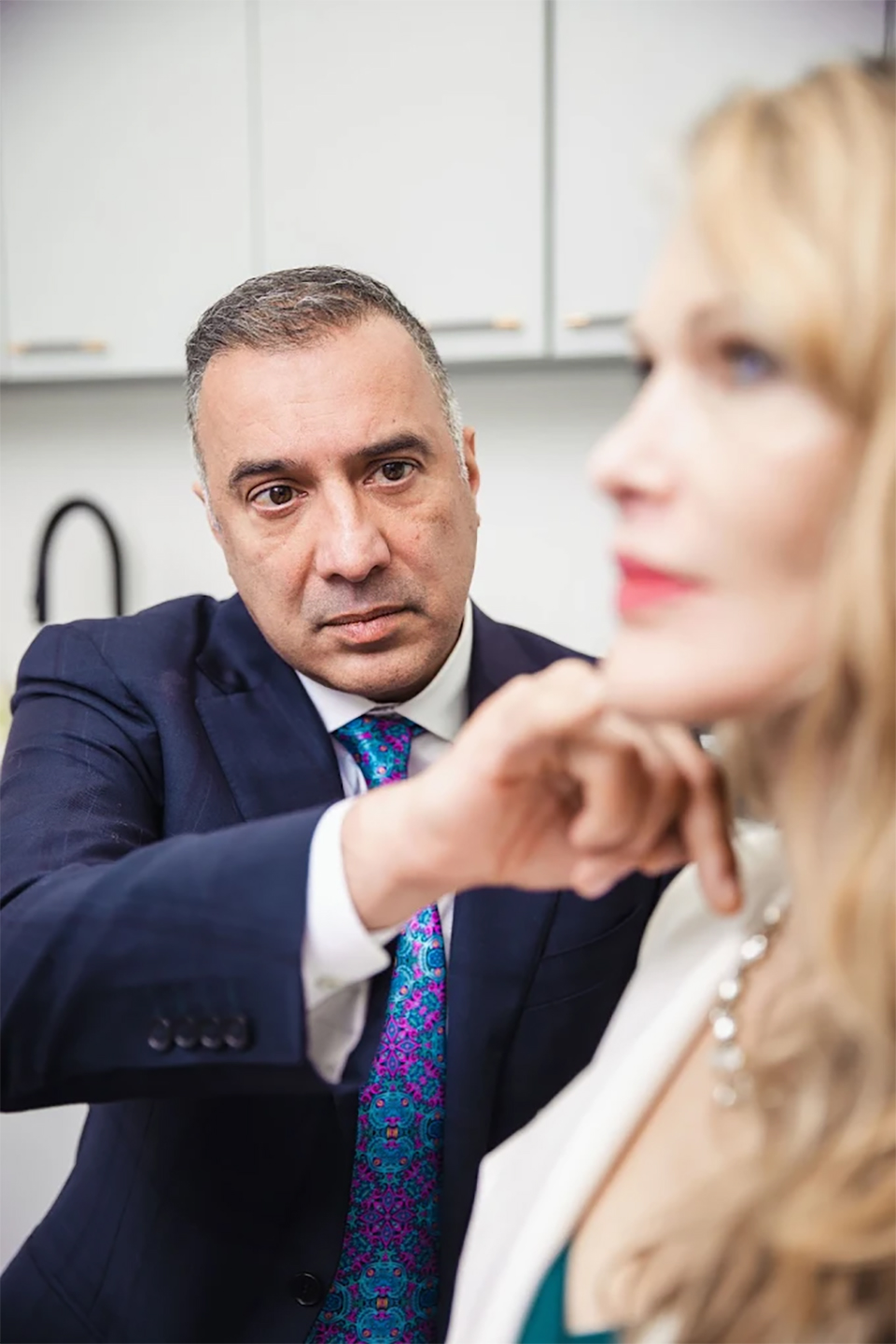
Experience teaches you which ones you should do.
How much of his personal life does Dr. Raghu Athré bring into the operating room?
We pushed a little on this.
Probably more than people realize.
I was raised for much of my childhood by my maternal grandparents and my grandfather had an enormous influence on how I approach life. He was ex-military and believed you shouldn't just be smart or just be strong. You should try to become what he called an "all-rounder."
He also believed that whatever you chose to do, you should commit yourself completely to doing it well.
That mentality is absolutely in my surgery.
So is the engineer in me. The attention to detail, the analysis, the need to understand why something works rather than simply knowing that it works.
But I don't want those things to become visually recognizable as a signature face.
Where I am present is in the decisions. What I consider balanced. What I preserve. When I decide I've done enough. When I resist doing more simply because I can.
If I've done the work well, you should see the patient before you see me.
What do people almost always get wrong about this kind of work?
Here is something you do not hear often.
People can look at plastic surgery and assume it's superficial. There was a time when I wondered about that myself.
I have an uncle who is a cardiothoracic surgeon. When I told him I was going into plastic surgery, his reaction was basically, "Call me when you're doing something worthwhile."
And he's right about one thing. I'm not saving someone's life every day. I'm not restarting hearts.
What I didn't understand early in my career was how much changing something on the outside can sometimes change what happens inside.
My patients taught me that.
I've watched someone make one physical change and then start taking care of herself, exercising, standing differently, becoming more social, rebuilding confidence or making other changes in her life.
I don't believe plastic surgery creates those things. The potential was already in that person.
Sometimes it just gives them a reset.
So I think what people sometimes misunderstand about my work is that the physical result isn't always the whole result.
What would you tell a young person who feels pulled toward something creative but afraid of where that path leads?
We asked Dr. Raghu Athré to be straight with us here.
Be fearless, but learn the craft. Fear is one of the easiest ways to stop yourself before you've even taken the first step.
At the same time, passion isn't enough. You have to commit yourself to becoming good at what you do. My grandfather used to tell me that he didn't care what I became, but whatever it was, I should try to be the best at it.
That stuck.
Learn from people who are better than you. Pay attention to detail. Persevere when you're not immediately good at something. And don't be afraid to be wrong.
I've changed my mind about things throughout my career because new evidence came along or because experience taught me something I didn't know before. That's not failure. That's growth.
And learn from everybody. Some of the most important things I've learned haven't come from textbooks or other surgeons. They've come from patients.
The minute you believe you've reached the point where nobody has anything left to teach you, you've probably stopped getting better.
What is the one goal we should hold you accountable to a year from now?
This one took a moment.
I'm increasingly interested in what happens beyond the surgery itself.
For a long time, surgeons have concentrated primarily on the procedure and the final result. I've become fascinated with everything that happens between those two points, particularly recovery.
That started me down a path of looking at technologies and protocols designed to help patients heal more efficiently. But I don't think recovery is the endpoint either.
The bigger idea is bringing appearance, recovery, health and quality of life together.
I've spent much of my career thinking about facial rejuvenation as a comprehensive process rather than a menu of isolated procedures. I want to continue pushing that idea further, documenting what works, being willing to discard what doesn't, and sharing more of what I've learned.
So if you're going to hold me accountable to something a year from now, hold me accountable to continuing to evolve the work and to sharing more of it instead of simply doing it.
Thank you so much for sharing your story with us, Dr. Raghu Athré.
Frequently Asked Questions about Dr. Raghu Athré
What is Dr. Raghu Athré's philosophy on facial plastic surgery results?
As a surgeon who has spent more than twenty years in practice, my core belief is that the physical result of surgery is not always the whole result. I want to bring how you look, how you feel and who you are into one cohesive whole. That means I am not trying to impose my idea of beauty on a patient. I want to understand what has changed, what bothers them and what makes their face uniquely theirs. If I've done the work well, you should see the patient before you see me.
What is Dr. Raghu Athré's background before becoming a facial plastic surgeon?
My original training was in chemical engineering, and that foundation still shapes the way I approach every face I work on. I went on to medical school intending to eventually pursue a PhD in biomedical engineering, but I fell in love with surgery during my training. I entered head and neck surgery and discovered, a couple of years into residency, that I had both a knack and a genuine love for facial plastic surgery. It brought the scientific, analytical side of my thinking together with aesthetic assessment and judgment in a way nothing else had.
How does Dr. Raghu Athré approach facelift technique and customization?
My view is that there is no single "best" facelift technique. Every facelift I perform is customized to the patient's individual anatomy, aging pattern and needs. I may use different techniques in different areas and often combine multiple approaches within the same surgery. The anatomy should determine the technique, not the name of the procedure. That principle comes directly from the engineering side of my thinking: I need to understand why something works, not just that it works.
What does Dr. Raghu Athré believe separates technical ability from surgical judgment?
Early in a surgical career, the focus tends to be entirely on technique, on learning how to perform every procedure and solve every problem. After more than twenty years in practice, what I think about far more is judgment. Technical ability gives you more things you can do; experience teaches you which ones you should do. I've also learned not to be afraid of changing my mind when medicine, technology or evidence changes. Being willing to say "I used to think this, but now I know something different" is part of becoming better at what you do.
What is Dr. Raghu Athré's one-year goal for his practice and work?
My focus is on pushing beyond the surgery and the final result to everything that happens in between, particularly recovery and the broader connection between appearance, health and quality of life. I've spent much of my career thinking about facial rejuvenation as a comprehensive process rather than a menu of isolated procedures, and I want to continue developing that idea further. Specifically, I want to document what works, be willing to discard what doesn't, and share more of what I have learned rather than simply continuing to practice. The accountability I am setting for myself is to evolve the work and to make it visible.
What personal influences shaped how Dr. Raghu Athré practices and thinks?
Much of my childhood was shaped by my maternal grandparents, and my grandfather in particular had an enormous influence on how I approach everything I do. He was ex-military and believed you should try to become what he called an "all-rounder," not just smart or just strong, but genuinely well-rounded and fully committed to whatever you chose to do. He didn't care what I became, but he was clear that I should try to be the best at it. That mentality is in my surgery, in the attention to detail, in the analysis, and in the decisions I make about when I have done enough and when to resist doing more simply because I can.