Dr Usman Zafar
Dr Usman Zafar is CEO of World Business Hub and author of books on AI for business leaders and digital sovereignty. His most important insight is that success in the automated economy depends on human-centric governance and strategic capability re-engineering, not just technology adoption—requiring leaders to bridge innovation with practical execution frameworks.
What compelled you to write your books on AI and digital sovereignty?
Dr Usman Zafar was driven to write after witnessing recurring challenges among business and government leaders: the lack of practical AI adoption roadmaps and growing concerns about who controls the world's digital infrastructure. His books emerged from a fundamental question about embracing innovation without surrendering control of the future.What originally motivated you to put pen to paper and tackle these complex technological topics?
I was compelled to write these books after spending more than two decades working at the intersection of technology, business transformation, and public-sector innovation across the Middle East, Asia Pacific, and Africa. Throughout my career, I witnessed two recurring challenges.

The first was that many business leaders understood that artificial intelligence would transform their industries, yet they lacked a practical roadmap for adoption. The conversation around AI was often dominated by technical jargon, hype, or fear. Through my work with executives, entrepreneurs, and government leaders, I saw a clear need for a guide that translated AI from a theoretical concept into a practical business tool. This became the foundation for Artificial Intelligence for SME Leaders.
The second challenge was far more strategic. As nations, organizations, and citizens became increasingly dependent on digital platforms, cloud infrastructure, and global data ecosystems, I began questioning who truly controls the world's data, digital infrastructure, and algorithms. The more I explored these questions, the more I realized that digital sovereignty would become one of the defining geopolitical and economic issues of our time. That journey led to Digital Sovereignty—a book that examines the global struggle for control over data, technology, and digital independence in an AI-driven world.
When I started writing, I was trying to work out a fundamental question: How can organizations and nations embrace technological innovation without surrendering control of their future? The books represent my effort to bridge the gap between innovation and governance, growth and security, opportunity and responsibility.
Ultimately, my goal was not simply to explain emerging technologies but to provide leaders with practical frameworks for navigating a rapidly changing world where AI, data, and digital infrastructure have become strategic assets.
What is the central idea driving your current work and why does it matter now?
Dr Usman Zafar's current work centers on surviving the operational and human friction of the automated economy. Rather than focusing purely on technology, he emphasizes human-centric governance, trust infrastructure, and individual capability re-engineering as the keys to success in the digital era.Could you break down the core thesis that runs through all your recent projects?
The central idea anchoring my current body of work, especially highlighted across my books, strategic advisories, and masterclasses, is surviving the operational and human friction of the automated economy.
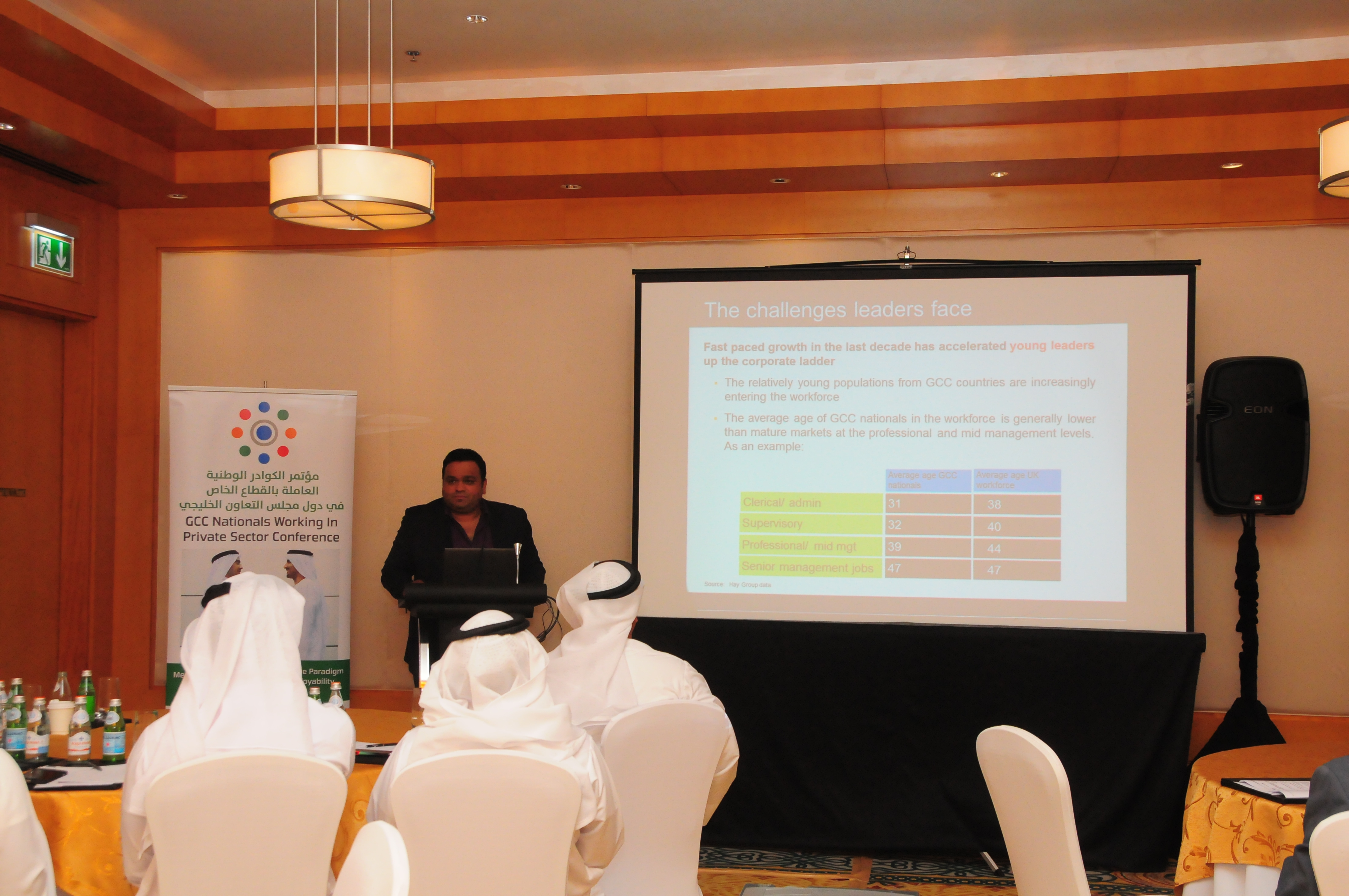
Rather than focusing on technology for technology's sake, my work centers on a critical truth: success in the digital era is a story of human-centric governance, trust infrastructure, and individual capability re-engineering, not just digital pipelines.
I address this core thesis across two distinct dimensions.
1. The Institutional Dimension: AI and Smart City Trust
In my book, SME Leaders & Artificial Intelligence: Navigating Customer-Centric Business Models in the Digital Economy, I explore why major global hubs often falter despite massive technology pipelines.

The central idea here is that organizations and smart cities cannot scale automated, intelligent systems if they suffer from a widening trust deficit. Technology must serve to secure public confidence and deliver human-centric value.
This matters right now because we are navigating a massive multi-billion dollar industrial IoT and AI market shift. Legacy business models are failing because leaders treat AI as an IT upgrade rather than an absolute overhaul of customer centricity and governance.
2. The Personal Dimension: The 2026 Skills Crisis
Through my focus on the changing landscape of corporate environments, I break past traditional AI hype to address what I term the "Optimization Target Zone."
The core concept is that traditional administrative, data-compilation, and bureaucratic reporting roles are currently primary targets for total automation. Survival requires a rapid transition away from static job titles toward a "3-Layer Framework" including Basket Decoupling, which transforms personal capabilities into something akin to a cognitive smart utility.
This is urgent because the skills crisis is no longer a future prediction; it is an active structural shift. White-collar professionals and enterprise leaders are finding that yesterday's skill sets are being automated in real-time, making practical, strategic clarity on human capital adaptation vital for survival.
In Summary: My work matters right now because it acts as a bridge between high-level technological capability (AI, Smart Cities, Blockchain) and actual execution. I shift the conversation away from the abstract "what" of technology to the practical, high-stakes "how" of human and corporate survival.
What advice would you give someone who has always wanted to write but hasn't started?
Dr Usman Zafar believes the biggest hurdle for aspiring writers isn't lack of talent or ideas—it's the weight of expectation. He advocates for lowering stakes, separating the writer from the editor, and building micro-habits rather than pursuing perfection from the start.For those who've been hesitating to begin their writing journey, what practical steps would you recommend?
The biggest hurdle isn't a lack of talent or a lack of ideas; it's the weight of expectation. When you want to write but haven't started, you are usually trying to write a masterpiece in your head before you've even cleared your throat on the page.
Here is the exact framework I would give you to break that inertia and finally start:
- Lower the Stakes (Lower Them Even More)
Your first draft does not need to be good; it just needs to exist. Give yourself permission to write terribly. A bad page can be edited, refined, and polished. A blank page gives you absolutely nothing to work with. Treat your early writing like a playground, not a courtroom. - De-couple the "Writer" from the "Editor"
These are two entirely different mindsets that cannot operate at the same time.
The Writer is creative, messy, and flows without judgment.
The Editor is analytical, precise, and structural.
When you try to edit your sentences while you are still trying to write them, you paralyze yourself. Write with your editor brain completely switched off. Let the thoughts spill out naturally, and trust that you will fix the mechanics later. - Build a "Micro-Habit" Instead of a Goal
Don't resolve to write a book, an essay, or even a chapter. That feels like climbing a mountain. Instead, commit to a micro-habit: write for just 15 minutes a day, or hit a target of 200 words.
200 words a day is roughly one long paragraph.
It takes less time than scrolling through a social media feed.
In a year, that small, frictionless habit compounds into over 70,000 words—the length of a full novel or a comprehensive business book. - Rely on Systems, Not Inspiration
If you wait for the "perfect moment" or a burst of inspiration to strike, you will rarely write. Inspiration is a byproduct of movement, not a prerequisite for it. Set a specific time, clear your workspace of distractions, and sit down to do the work. The ideas show up after your hands start moving. - Focus on the Consumption-to-Creation Ratio
If you want to write, you are likely already an avid reader. Shift your perspective slightly. When you read or consume content, don't just look at what is being said—look at how it is being built. Notice the transitions, the pacing, and how arguments are structured. Reverse-engineer what you admire, and use those patterns to find your own voice.
The Takeaway: The secret to getting started is realizing that every great writer you admire started exactly where you are sitting right now: looking at a blank screen, wondering if they had anything worth saying. The only difference is they chose to type the first word anyway. Turn off the inner critic, set a timer for 15 minutes, and write your first paragraph today.
How do you transform complex ideas from first concept to finished draft?
Dr Usman Zafar follows a structured, five-step process designed to bridge complex tech concepts with practical execution. His system emphasizes immediate idea capture, structural blueprinting before writing, and separating the creative and editorial phases for maximum efficiency.Could you walk us through your specific writing process from that initial spark to publication-ready work?
My writing process is a structured, repeatable system designed to bridge complex tech concepts with practical execution. Here is how a project moves from raw concept to finished draft:
- Idea Capture
Ideas hit during consultations, research, or masterclasses. I never trust my memory. I use a strict digital capture system to log every insight or case study immediately, letting them marinate before moving them into development. - Structural Architecture
I never start writing without a blueprint. I outline the core thesis first, then break it into chapters. Under each section, I bullet-point the key arguments, frameworks, and supporting real-world case studies so I always know exactly where the narrative is going. - The Fast Draft
When writing the first draft, I silence my inner editor. I write fast and messily to maintain momentum. If I need a specific statistic or smart city data point, I type and keep moving. The sole goal is getting the thoughts on paper. - Structural Editing
After stepping away for a couple of days, I return with an analytical eye. This pass is about macro-level structural integrity. I ensure the logic flows smoothly, ruthlessly cut sections that do not serve the core message, and fill in the missing data points. - Refinement and Clarity
The final pass focuses on rhythm and impact. I strip out dense corporate jargon and academic phrasing. If a busy executive or startup founder cannot instantly grasp the strategic takeaway upon reading a sentence, I rewrite it.
The Reality: A finished book or advisory paper is not the result of a single perfect sitting. It is the product of a repeatable process where a raw idea is systematically shaped and refined to deliver maximum value.
What do you want readers to feel after finishing your work?
Dr Usman Zafar aims to shift readers from passive anxiety to strategic clarity. He wants them to see past technology hype, feel empowered with actionable frameworks, and experience an urgent desire to execute rather than remain paralyzed by rapid change.When someone closes your book or finishes one of your advisory reports, what specific transformation are you hoping to achieve?
When a reader finishes my work, whether it is one of my books, a strategic advisory report, or a masterclass, I want them to walk away with a profound shift in perspective, moving from a state of passive anxiety to one of strategic clarity.
Specifically, I want them to experience three distinct takeaways:
- Clear-Eyed Realism over Hype
I want the reader to look past the overwhelming AI and technology hype and clearly see the structural realities of the automated economy. They should understand exactly which sectors, jobs, and business models are in the "Optimization Target Zone" and why legacy approaches are no longer viable. I want them to think, "Now I finally see the true landscape, without the marketing noise." - A Sense of Agency and Empowerment
The rapid pace of technological change can easily cause panic or paralysis. I want my readers to finish the last page feeling deeply empowered rather than intimidated. By replacing abstract technical jargon with practical, actionable blueprints, like the 3-Layer Framework, I want them to realize that navigating this transition is entirely within their control. They should feel, "I do not just have to survive this shift; I have a concrete plan to leverage it." - Urgency to Execute
Ultimately, insights are useless without application. I want to spark an immediate desire to take action. Whether it is a corporate leader restructuring their smart city governance model or an individual professional decoupling their skills basket, the final feeling must be a compelling urge to execute. I want them to close the book, step away from the screen, and think, "I need to start implementing these changes today."
In Short: I want my readers to close the work feeling equipped, focused, and ready. I want to shift their mindset from asking "What is the future going to do to us?" to confidently declaring "Here is exactly how we are going to shape the future."
Frequently Asked Questions about Dr Usman Zafar
What is Dr Usman Zafar's background in technology and business transformation?
I have spent more than two decades working at the intersection of technology, business transformation, and public-sector innovation across the Middle East, Asia Pacific, and Africa. As CEO of World Business Hub, I've worked extensively with executives, entrepreneurs, and government leaders to bridge the gap between technological capability and practical implementation.
What is the "Optimization Target Zone" that Dr Usman Zafar discusses?
The "Optimization Target Zone" refers to traditional administrative, data-compilation, and bureaucratic reporting roles that are currently primary targets for total automation. I use this concept to help professionals understand which job functions are most vulnerable to AI replacement and need immediate strategic repositioning.
What is Dr Usman Zafar's "3-Layer Framework" for surviving automation?
The 3-Layer Framework includes Basket Decoupling, which transforms personal capabilities into something akin to a cognitive smart utility. This framework helps individuals transition away from static job titles toward dynamic skill sets that can adapt to the automated economy's demands.
How does Dr Usman Zafar define digital sovereignty?
Digital sovereignty examines the global struggle for control over data, technology, and digital independence in an AI-driven world. It addresses the critical question of who truly controls the world's data, digital infrastructure, and algorithms as nations and organizations become increasingly dependent on digital platforms and cloud infrastructure.
What makes Dr Usman Zafar's approach to AI adoption different from other experts?
Rather than focusing on technology for technology's sake, my work centers on human-centric governance, trust infrastructure, and individual capability re-engineering. I shift the conversation away from the abstract "what" of technology to the practical, high-stakes "how" of human and corporate survival in the automated economy.
What is Dr Usman Zafar's recommended daily writing habit for aspiring authors?
I recommend building a micro-habit of writing just 200 words a day, which takes less time than scrolling through social media. This small, frictionless habit compounds into over 70,000 words in a year—the length of a full novel or comprehensive business book. The key is consistency over perfection.