Haru Yosano
Haru Yosano is a Japanese voice actor, localization voice director, and voice casting director based in Kyoto, Japan. In 2023, Haru became the first Japanese voice actor to win three awards at a single Voice Arts Awards ceremony. Haru's hardest-won lesson is that a performer's accent and cultural background are not flaws to work around — they can be the precise qualities that make a performance specific and irreplaceable.
From a closet recording booth in Kyoto to a Beverly Hills awards stage where she spoke in imperfect English and was welcomed warmly anyway, Haru Yosano's path into voice work defies nearly every convention the Japanese industry considers standard. In this interview with Powerful Blueprints, Haru speaks candidly about the decade she spent performing a role someone else wrote for her, the moment a single pandemic question changed the direction of her life, and what she believes a human voice can carry that technology cannot. Good morning, Haru!
What does Haru Yosano's preparation look like before a recording session begins?
Haru's pre-session ritual centres on silence and deep script study, and her approach to voice care includes a traditional Japanese Kampo formula called Kikyo-to alongside plain water throughout the session.
When I am working as a voice actor or voice director, I do not have anything playing in the background.
When I am translating and adapting a script for localization, I sometimes listen to music from the project itself, or to something that helps me understand its emotional world.
But before recording, what I need is silence.
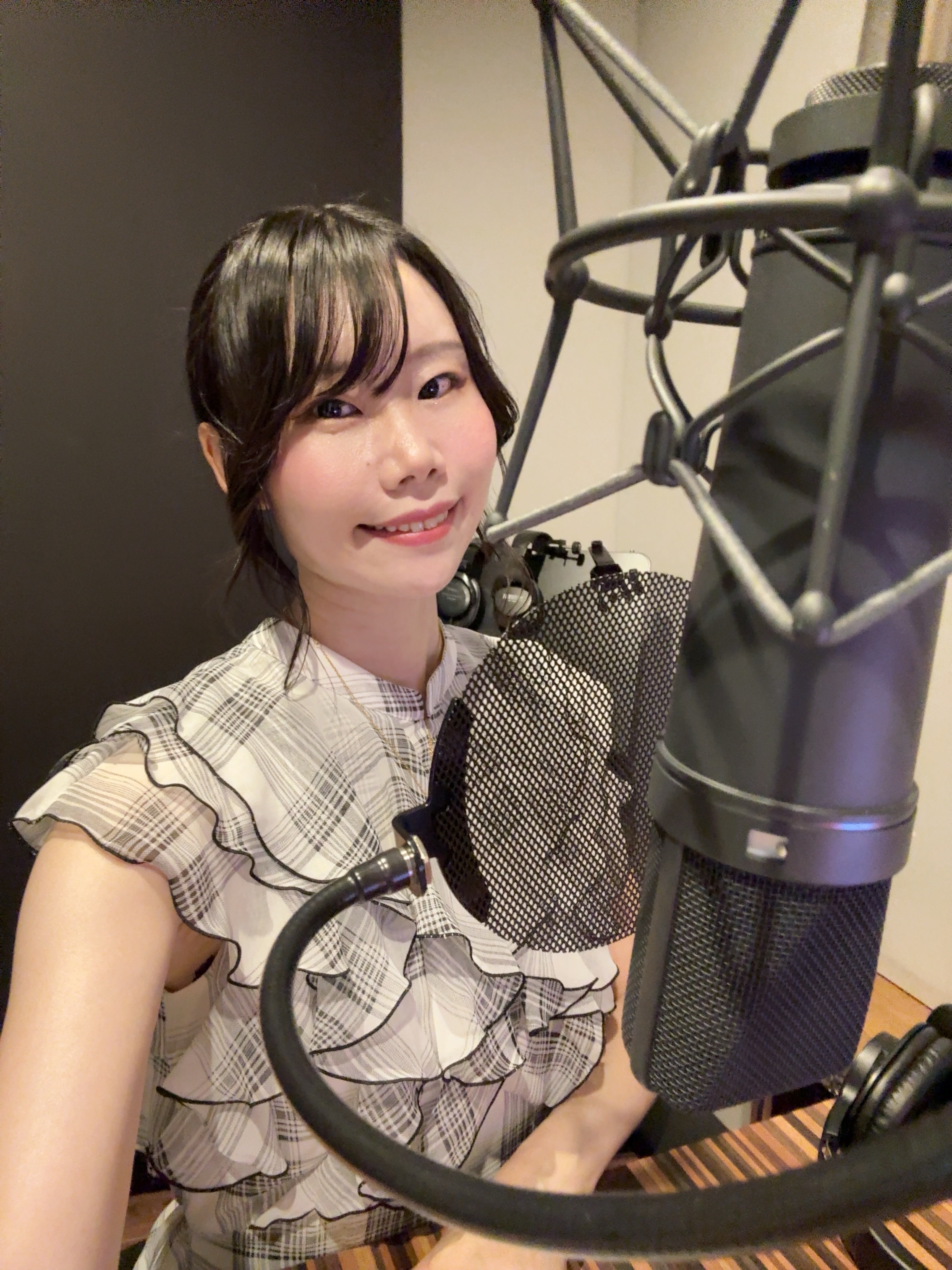
That is my first rule.
It is not about creating a special atmosphere. Silence is simply one of the conditions I need in order to listen properly and give the work my full attention.
Most of that first hour is spent with the script.
I think about where the character comes from, what they want, what they may be hiding, and what is happening beneath the words. I also look at how they speak to different people, where their thoughts shift, and what changes from one line to the next.
By the time I stand in front of the microphone, I want to have already begun living inside the world of the story. That allows me to perform truthfully from the very first take, rather than trying to force something into existence.
What I drink is very unglamorous: water.
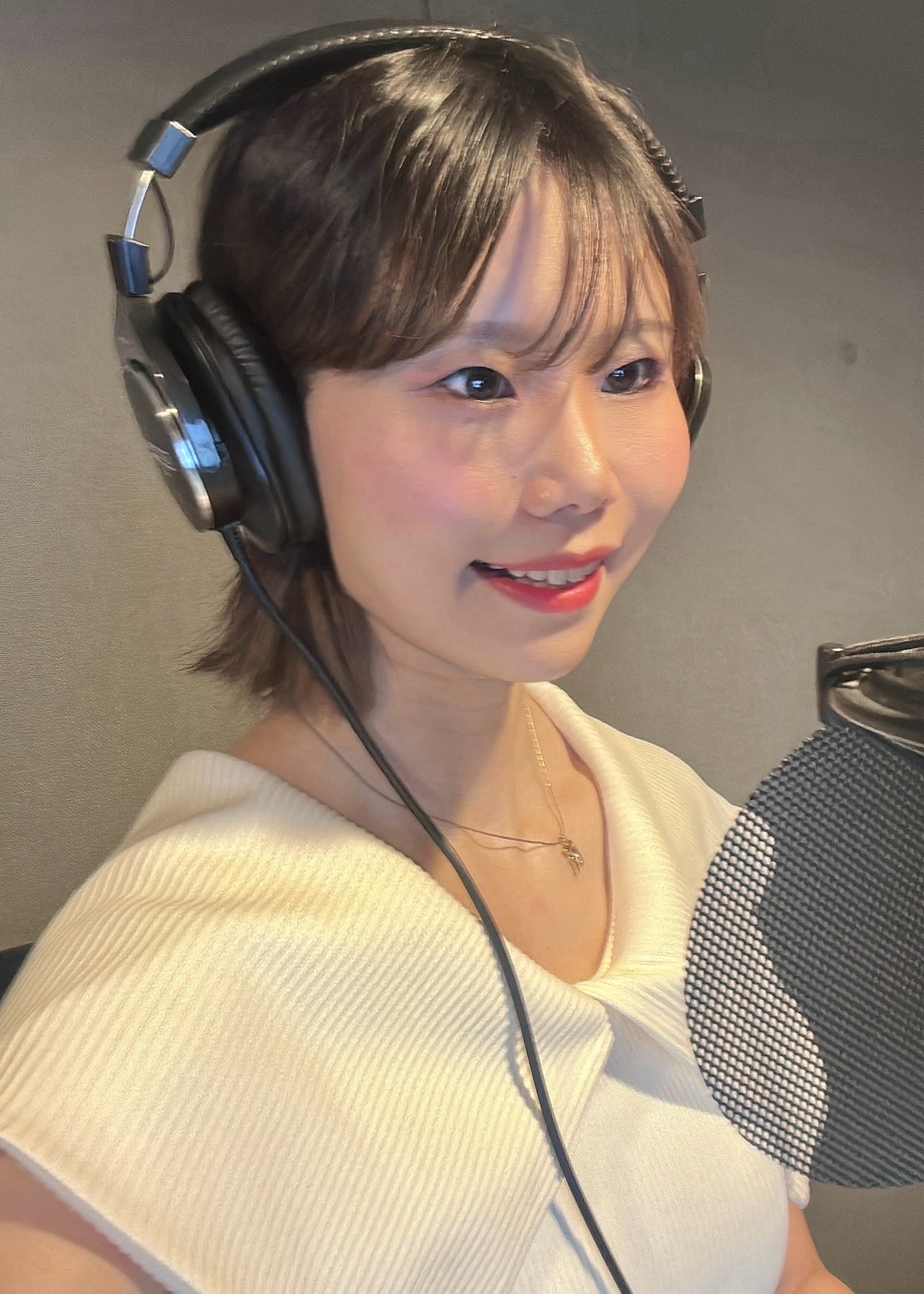
I drink water before and throughout a recording session. I tend to avoid tea immediately before recording because it can leave my mouth feeling dry, while sweet drinks can make lip and mouth noises more noticeable.
During longer sessions, I sometimes dissolve a Japanese Kampo formula called Kikyo-to in lukewarm water and sip it between takes.
I think of my voice as an instrument, so taking care of it is simply part of preparing for the work.
After recording, or during a longer break, I relax with coffee or tea.
That is one of my small pleasures.
When did Haru Yosano decide to become a professional voice actor?
Haru made the decision to pursue voice acting professionally in April 2020, after the COVID-19 pandemic ended her work in inbound tourism in Kyoto, and began working professionally just two months later in June 2020.
There was a specific moment — not when I first dreamed of becoming a voice actor, but when I decided to make it my profession.
It was April 2020. Until then, I had been working in inbound tourism in Kyoto. When the COVID-19 pandemic began, that work disappeared.
I found myself asking a very simple question:
"How do I want to live from now on?"
The answer came from an old memory.
On my seventeenth birthday, one of my high school English teachers wrote this message for me: "Someday, you may become a voice actor and carry your voice out into the world."
Those words had remained quietly in my mind for more than ten years. They were like a signpost I had passed many times while pretending not to see it.
In 2020, I finally decided to take them seriously.
I was not represented by a voice talent agency. I had not attended a voice-acting academy, and I had no plans to move to Tokyo. I had followed none of the conventional routes into voice acting in Japan.
So I began where I was.
I built a small recording booth inside a closet in my home in Kyoto. I studied Netflix's publicly available remote-recording guidelines, learned how to record and deliver professional audio, and began looking for work.
About two months later, in June 2020, I started working professionally as a voice actor.
Voice acting was never something I gradually realized had become more than a hobby.
It was the answer I chose when I asked myself how I wanted to live.
What would Haru Yosano tell a young person who is afraid of pursuing a creative life?
Haru draws on her own experience of self-doubt — including hesitating until the last moment before attending the 2023 Voice Arts Awards in Beverly Hills — to offer honest, specific encouragement to artists who are afraid to begin.
The first thing I would tell them is that I was afraid, too.
And fear does not necessarily disappear completely. It simply stops making all of your decisions.
In 2023, I received my first nominations for the Voice Arts Awards in the United States. To be honest, I could not decide whether to attend the ceremony until almost the last moment.
I am not naturally comfortable in glamorous settings or with promoting myself, and Beverly Hills felt very far removed from my everyday life in Kyoto.
I kept wondering:
"Does someone like me really belong in a place like that?"
In the end, I decided to go, arriving only one day before the ceremony.
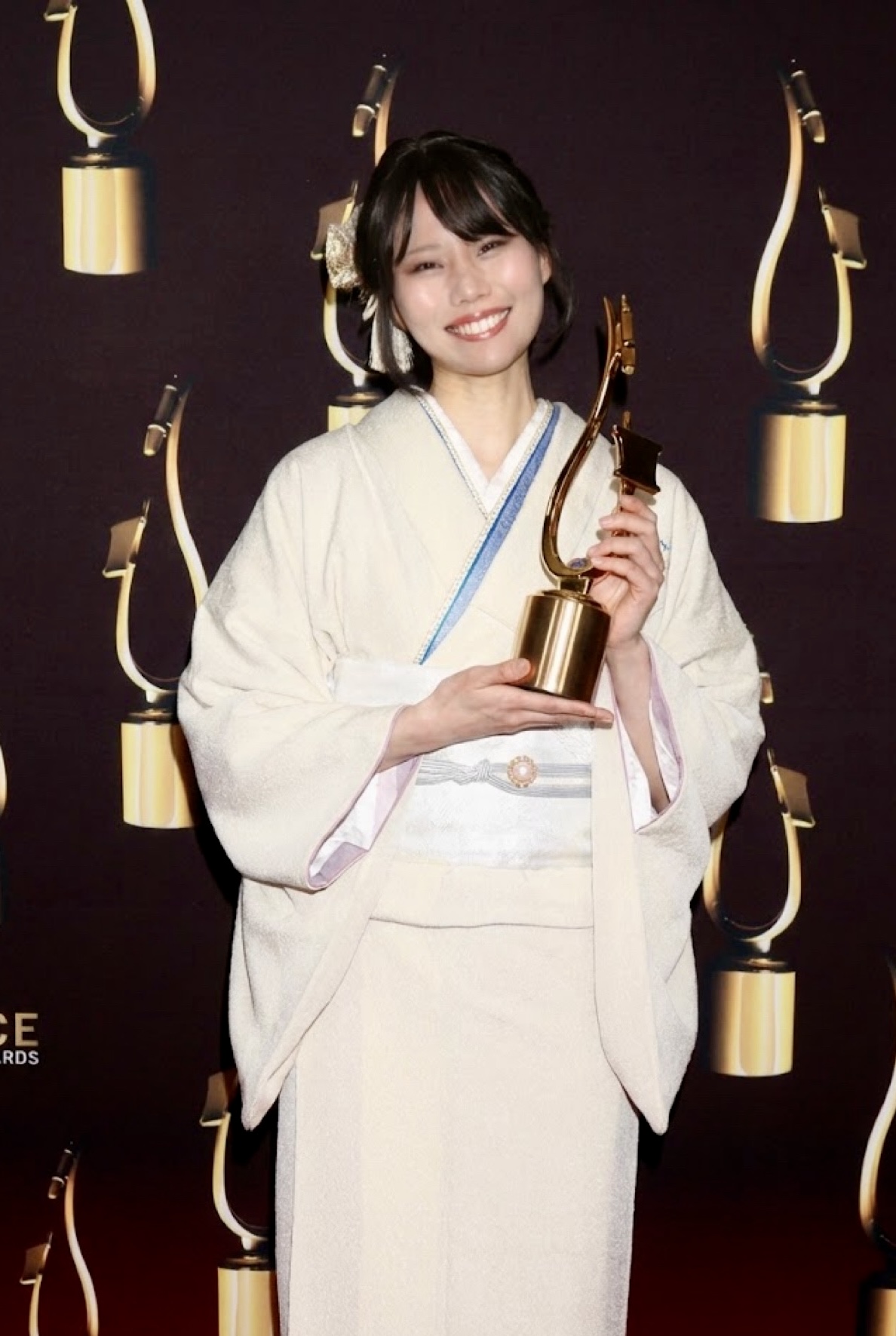
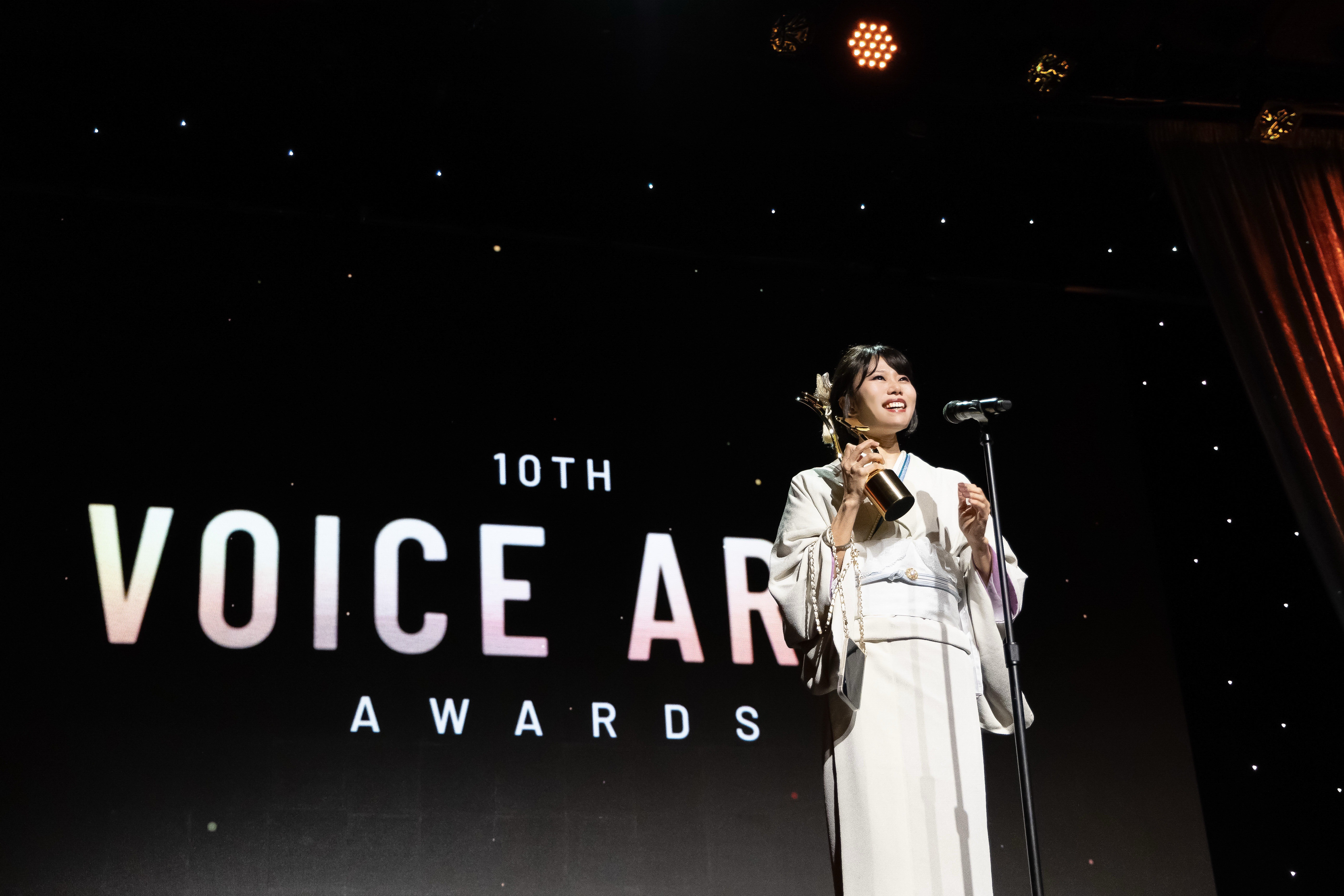
I won three awards that evening. At the time, I became the first Japanese voice actor to win three awards at a single Voice Arts Awards ceremony.
But what stayed with me most happened after I stepped off the stage.
I had given my acceptance speeches in English, knowing that my English was not perfect. Still, the people in that room welcomed me warmly. Afterward, voice actors from different countries told me, in different ways, that I did not need to become someone else to belong there.
That was new to me.
Until then, I had spent a great deal of energy trying to appear more polished, more impressive, or more confident than I really felt. That evening helped me begin to let go of some of that.
So this is what I would honestly tell someone who is just beginning:
You do not have to overcome all of your fear before you start.
You do not have to become perfect first.
A rejection from an audition, an exhibition, or an award does not determine the value of your work. It may only mean that this was not the right role, the right place, or the right moment.
And even while your work still feels unfinished, let some of it leave your hands.
Share what you can make as the person you are now.
Somewhere, someone may already be waiting for exactly what only you can make. You're enough as you are.
What was the project that surprised Haru Yosano most — and what did it change?
Haru was cast as Xero in The Pit of Legends — a game experience within Fortnite — originally auditioning only for the Japanese version, then unexpectedly performing the role bilingually in both Japanese and English after the team at JOGO Games valued her accent and cultural perspective rather than treating them as obstacles.
The project was The Pit of Legends, a game experience within Fortnite, in which I voiced a character named Xero.
I originally auditioned only for the Japanese version. Xero was a cyberpunk ninja with Japanese roots, so I expected the role to remain entirely in Japanese.
Then I received a completely unexpected question:
"Would you like to try the English version as well?"
I had never lived outside Japan, and I had learned English through the standard Japanese education system. Performing a leading role in English meant facing one challenge after another.
Until then, I had assumed that my Japanese accent would be treated as a flaw — something I would need to correct or erase.
But the team at JOGO Games, who created the project, and the voice director, Stephanie Garrido, saw it differently.
They valued both my accent and the cultural perspective I brought to Xero as a Japanese performer. Stephanie recorded pronunciation guides for me, and the team welcomed ideas rooted in Japanese language and culture.
At one point, I suggested using a yojijukugo — a Japanese four-character idiom — for one of Xero's special attack lines. The idea was accepted, and the phrase remained in Japanese even in the English-language version.
The project gave me far more than another credit on my résumé.
It changed how I understood my own voice. My accent and cultural background were not simply things to work around. They could also be part of what made the performance specific to me.
When I pressed the record button for that first Japanese audition, I had no idea it would lead to performing the role in two languages — or to seeing my own voice differently.
How has Haru Yosano changed internally since beginning her career?
Haru describes the most significant shift in her career not as a technical improvement but as a changed relationship with imperfection — one that transformed how she approaches the recording process itself.
The greatest change is not that my insecurities have disappeared.
It is that I relate to imperfection differently now.
When I first began, I was trying to hide many things: my lack of confidence, my inexperience, and the parts of myself that did not yet feel polished or complete. I even tried to hide how hard I was working to keep all of that out of sight.
I believed that if I could find the "correct" performance, I could prove that I deserved to be there. I would record take after take, searching for an answer that would finally make me feel legitimate.
Two experiences began to change that: attending the 2023 Voice Arts Awards ceremony, which I mentioned earlier, and performing in English for the first time through the Fortnite project.
In both situations, the qualities I felt most self-conscious about did not seem to be obstacles to the people around me. My nervousness, my accent, and the parts of me that were still developing were not simply being tolerated. They were part of how people connected with me and with my work.
Since then, one thought has guided me:
I do not have to be perfect to contribute something meaningful. I am allowed to bring myself into the work.
That changed the recording process for me.
I no longer see a session as a search for the one correct answer. I see it as a process in which everyone involved — the performer, director, writer, engineer, and client — listens, responds, and gradually discovers what the work needs.
I take direction more openly. I leave more room for curiosity. And I am less afraid to try a version that may not be the obvious one.
I am also less inclined to remove the things I once considered weaknesses, including my accent and the instincts shaped by my cultural background.
They do not always need to be hidden or corrected. Sometimes, they are precisely what allows me to bring something of my own to a performance.
What piece of criticism stayed with Haru Yosano the longest — and how did she eventually use it?
Haru spent more than ten years treating a single audition verdict — that her voice was not distinctive enough to market professionally — as fact, before reframing it as one assessment made by one evaluator in one room on one particular day.
When I was eighteen, I auditioned for admission to a voice-acting school.
The feedback I received was, in essence:
"Your voice is not particularly distinctive. It may be difficult to market you professionally."
I gave up almost immediately.
For more than ten years, I treated that judgment as fact. I studied other subjects and spoke about voice acting with a kind of nostalgia, always in the past tense, as though it belonged to another version of my life.
I thought I had abandoned my dream.
In reality, I had simply accepted a line that someone else had written for me:
"My voice is not distinctive enough."
I performed that role for so long that I almost forgot the script was not mine.
When the pandemic finally pushed me to give voice acting another try, I gradually began to see that judgment differently.
It was an assessment made by one evaluator who heard my voice in one room, on one particular day. It measured my voice according to the expectations of one particular market.
But I began working from a recording booth inside a closet in Kyoto, first with clients in Japan and eventually with people around the world.
Perhaps the original assessment made sense within the boundaries of that particular room.
But the world contained many more rooms than that one.
What message does Haru Yosano's work carry that it never quite says out loud?
Haru's work across acting, narration, casting, localization, and voice direction is guided by a single question — what can a voice carry forward — and by a conviction that a human voice can preserve traces of culture, memory, and lived experience that technology alone cannot replicate.
My work takes many forms: acting, narration, casting, localization, and voice direction.
Across all of them, I often find myself returning to the same question: what can a voice carry forward?
When I perform a character with Japanese roots, or work on a project connected to Japanese history or culture, I try to notice the details that come from lived experience: how a person speaks, what they leave unsaid, and what feels natural within a particular time, place, or community.
In my own small way, I think I am trying to help carry those details forward.
I grew up in Japan, shaped by Japanese culture, and studied Japanese cultural history before beginning my career in voice work. It is not something I often speak about directly, but I hope my voice can preserve something of the people, places, and cultures behind the work.
Traditions, dialects, ways of thinking, and personal memories can fade, change, or become flattened when they pass from one generation or language to another.
The human voice cannot preserve them perfectly. But it can carry traces of experience: an accent, a hesitation, a warmth, or an imperfection that reminds us a person was there.
Technology can reproduce more and more of how a voice sounds. Still, I believe there is meaning in knowing that a person listened, understood, and chose how to say the words.
So, if I were to say the message clearly just once, it would be this:
What people carry — their memories, histories, voices, and ways of seeing the world — is worth preserving.
And sometimes, a human voice is one of the ways we pass it on.
What does the world most often get wrong about Haru Yosano?
Haru did not enter voice acting through Tokyo agencies or a voice-acting academy — she began during the pandemic from a recording booth built inside a closet in Kyoto, and sees her unconventional path not as a workaround but as proof that a small room can still be the place from which you begin to reach the world.
In Japan, there is a well-established route into professional voice acting: move to Tokyo, attend a voice-acting academy, and join a voice talent agency.
When people see international awards beside my name, they sometimes assume that I followed that route.
I did not.
I was born in Fukuoka and now live in Kyoto. I did not graduate from a voice-acting academy, join a conventional Japanese voice talent agency, or enter the industry through existing professional connections.
I began during the pandemic, recording from a booth built inside a closet.
That path was not a substitute for the conventional route. It was simply the route that proved right for me.
I have great respect for the performers who train and build their careers through Tokyo-based agencies. It is an intensely competitive system, and for many major anime roles, it remains the most direct and realistic path. The discipline and persistence required to build a career within it are qualities I deeply admire.
My own experience has simply taught me something different: Tokyo is not the only doorway into voice work.
There may be someone reading this from a small room, far from the traditional center of the industry, wondering whether it is possible to begin from there.
Perhaps that is the thing people most often misunderstand about me — and the most useful thing I can tell them:
A small room can still be the place from which you begin to reach the world.
What is Haru Yosano's goal for the next twelve months?
Haru's stated goal for the next twelve months is deeper involvement in game acting and localization for international releases, with more bilingual performance opportunities in both Japanese and English — part of a longer lifelong ambition to use her voice to preserve the cultures and traditions of different communities.
One year from now, I hope to be more deeply involved in acting and localization, especially for games released to audiences around the world.
Games still feel closest to the anime, manga, and stories I grew up with. I hope to have taken on new titles, new roles, and new challenges, with more opportunities to perform in both Japanese and English. I would also like to be more involved in localization that carries a story across languages while preserving its emotional and cultural meaning.
Beyond that one-year goal, I have a much longer dream — one that may take ten or twenty years, or perhaps an entire career, to understand fully.
As I grow older and my voice matures and deepens, I would like to lend it to projects that preserve and communicate the cultures and traditions of different countries and regions.
In some ways, that work has already begun. I often record regional commercials across Japan, introducing local industries, products, places, and the people behind them. It is work I hope to continue for many years.
A regional commercial and a twenty-year dream may seem very different in scale, but I see a connection between them. Both involve listening carefully to what matters to a community and helping it reach other people through voice.
I would like to contribute to projects that preserve something meaningful for the future while also asking thoughtful questions of the people living today.
Perhaps this ambition comes partly from my background. Before I ever stood in front of a microphone, I completed a Master's degree in Japanese cultural history and earned a museum curator qualification. The idea of preserving what people have created and passing it forward has always been important to me.
As a voice actor living and working outside the industry's traditional center, I would also be glad if my career could offer one possible example of how this kind of creative life can be built.
I still do not know exactly what that twenty-year dream will look like. For now, I can only keep moving toward it through the work directly in front of me.
Thank you so much for sharing your story with us, Haru!
Frequently Asked Questions about Haru Yosano
How did Haru Yosano begin her voice acting career?
Having taken none of the conventional routes into voice acting in Japan, I began during the COVID-19 pandemic. I was born in Fukuoka and now live in Kyoto, and until 2020 I had been working in inbound tourism. When that work disappeared, I asked myself how I wanted to live and returned to a message an English teacher had written on my seventeenth birthday — that someday I might carry my voice out into the world. I built a small recording booth inside a closet in my home, studied Netflix's publicly available remote-recording guidelines, and started working professionally in June 2020. I never attended a voice-acting academy, moved to Tokyo, or joined a conventional agency; I simply began where I was.
How does Haru Yosano prepare for a recording session?
Before recording, what I need is silence — not for atmosphere, but so I can listen properly and give the work my full attention. Most of that first hour is spent with the script: where the character comes from, what they want, what they may be hiding, and what shifts from one line to the next. For voice care, what I drink is very unglamorous — water, before and throughout a session. I avoid tea immediately before recording because it can leave my mouth dry, and sweet drinks because they can make mouth noises more noticeable. During longer sessions I sometimes dissolve a Japanese Kampo formula called Kikyo-to in lukewarm water and sip it between takes. I think of my voice as an instrument, so caring for it is simply part of the work.
What was Haru Yosano's breakthrough role in Fortnite?
One project that changed how I see my own voice was The Pit of Legends, a game experience within Fortnite, where I voiced a character named Xero. I originally auditioned only for the Japanese version, then received an unexpected question: would I like to try the English version as well. I had learned English through the standard Japanese education system and had never lived abroad, so it meant one challenge after another. But the team at JOGO Games and the voice director, Stephanie Garrido, valued my accent and cultural perspective rather than treating them as flaws — Stephanie even recorded pronunciation guides for me. At one point I suggested using a yojijukugo, a Japanese four-character idiom, for one of Xero's attack lines, and it stayed in Japanese even in the English version.
What did winning at the 2023 Voice Arts Awards mean for Haru Yosano?
In 2023 I received my first Voice Arts Awards nominations, and to be honest I could not decide whether to attend the ceremony in Beverly Hills until almost the last moment. I went, arriving only a day before, and won three awards that evening — at the time, becoming the first Japanese voice actor to win three awards at a single Voice Arts Awards ceremony. What stayed with me most came after I stepped off the stage: I had given my acceptance speeches in imperfect English, and the people in that room welcomed me warmly. Voice actors from other countries told me, in different ways, that I did not need to become someone else to belong there.
How does Haru Yosano think about early rejection and criticism?
When I was eighteen, I auditioned for a voice-acting school and was told, in essence, that my voice was not particularly distinctive and might be difficult to market professionally. I treated that judgment as fact for more than ten years, speaking about voice acting only in the past tense, as though it belonged to another version of my life. When the pandemic pushed me to try again, I began to see it differently: it was one assessment, made by one evaluator who heard my voice in one room on one particular day, measured against one particular market. Working from a closet booth in Kyoto, I eventually reached clients in Japan and then around the world. The world, it turned out, contained many more rooms than that one.
What is the deeper mission behind Haru Yosano's voice work?
Across everything I do — acting, narration, casting, localization, and voice direction — I keep returning to one question: what can a voice carry forward. Technology can reproduce more and more of how a voice sounds, but I believe a human voice can carry traces of experience that are harder to replicate: an accent, a hesitation, a warmth, an imperfection that reminds us a person was there. Part of this comes from my background — before I stood in front of a microphone, I completed a Master's degree in Japanese cultural history and earned a museum curator qualification, and the idea of preserving what people have created and passing it forward has always mattered to me. In my own small way, I hope my voice can help carry the memories, histories, and ways of seeing the world that are worth preserving.