Mark Saxby
Mark Saxby is a social media consultant, professional speaker, and author whose debut children's novel, The Last Chocolate Bar in the World, took nineteen years from idea to publication. His core insight is that social media platforms compete fiercely for our attention, but we can choose how much of our lives we hand over to them, getting results online and having a life are not mutually exclusive goals.
From a kitchen sink in Brittany where a children's novel downloaded itself fully formed into his mind, to a TEDx stage urging audiences to spend less time on their phones, Mark Saxby's career moves between storytelling, journalism, and the messy realities of life in a distracted world. In this interview with Powerful Blueprints, Mark talks candidly about a nineteen-year manuscript, the hard lessons behind his social media book, and the single message that runs through both. Good morning, Mark!
When did Mark Saxby first realise he was a writer?
Mark Saxby traces his identity as a writer to a specific moment at a kitchen sink in Brittany, where the full framework for a children's novel arrived in his mind in an instant, nineteen years before the book was finally published.

I was washing up at the sink in a holiday home in Brittany when the framework for a children's novel seemed to download itself into my brain.
It was astonishing. The twists, the turns, the characters, the story arc. All I'd done was ask my wife whether she could imagine a world without chocolate, and suddenly The Last Chocolate Bar in the World was born.
I'd actually wanted to be an author when I was about nine, but by my teens I'd decided journalism was probably a more realistic way to make a living from writing. So I trained as a journalist and went on to work in newspapers, magazines, radio and television, eventually spending more than a decade as a BBC reporter and news editor.
Through all that time, the desire to write a book never completely left me. But it came rushing back to the front of my mind during that holiday in France. I knew then that I was going to be an author.
It took another 19 years before The Last Chocolate Bar in the World was finally published.
Since then, I've also written a book about social media, How to Get Results on Social Media Without It Taking Over Your Life, which is due to be published too.
And there are definitely more books in me. I've got the bug.
Looking back, perhaps it isn't surprising. Storytelling is what I do. I'm a professional speaker and social media consultant, and both rely heavily on telling stories that make people think, feel and act.
What was Mark Saxby really trying to work out when he started writing his children's novel?
Mark Saxby says the honest answer is that he simply wanted to be an author, though as the characters developed, themes of courage, truth, and standing up for what is right emerged naturally from the story.
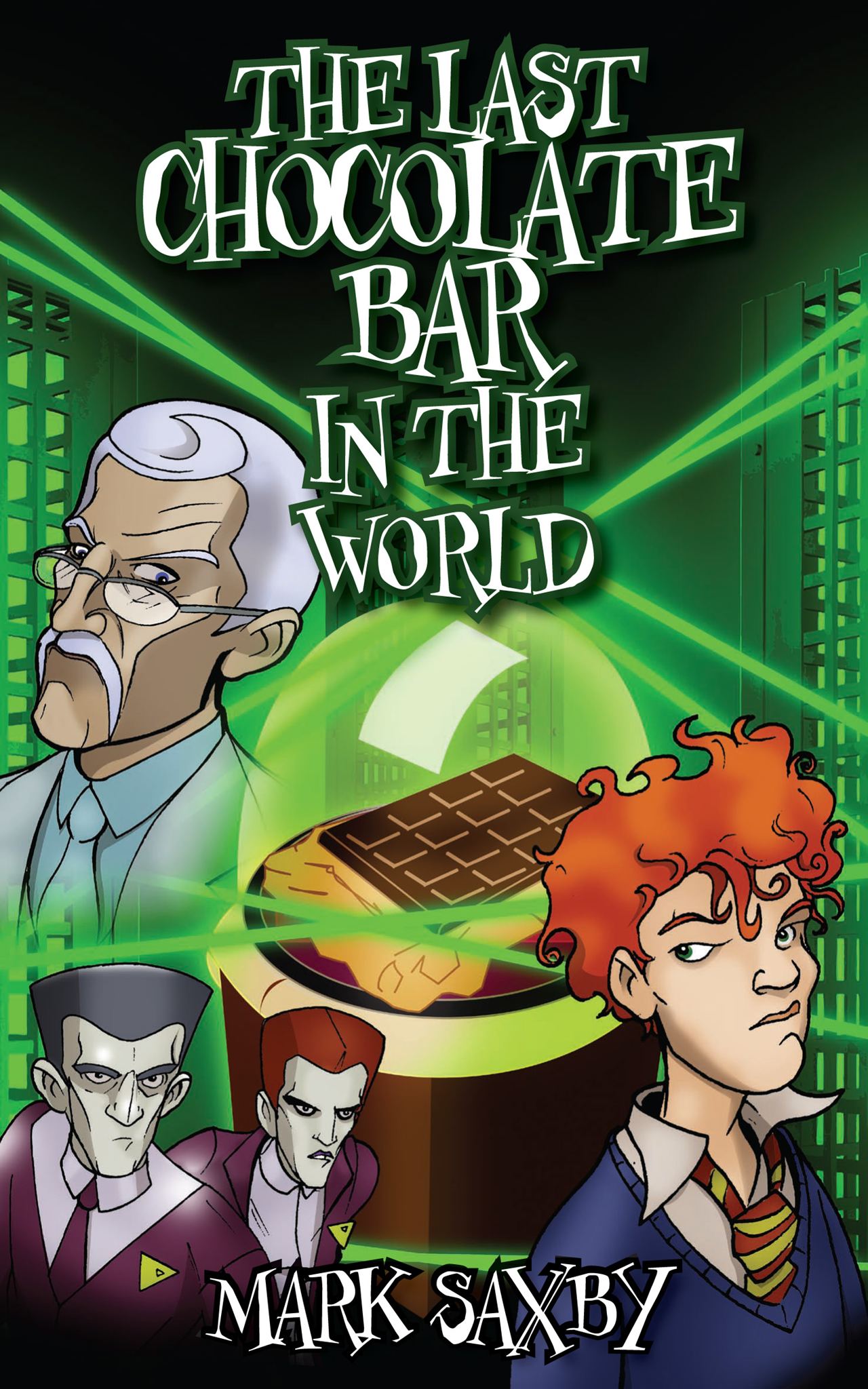
Honestly? I don't think I was trying to work anything out. I just wanted to be an author.
But as I wrote The Last Chocolate Bar in the World and the characters began to develop, I realised there were things I wanted the story to explore.
The biggest was courage. Sometimes we rely on other people to be the strong ones, but we can discover our own bravery when circumstances force us into situations we would never have chosen for ourselves.
There are other themes running through the story too, telling the truth, standing up for what is right, looking after our planet and recognising when other people are being exploited.
But I never wanted it to feel like a book that was trying to teach children lessons.
First and foremost, it's an adventure and it's supposed to be funny.
It's primarily written for eight to eleven-year-olds, although plenty of adults have enjoyed it too. Often they notice ideas and jokes that younger readers might miss, which is one of the reasons I particularly love hearing about parents reading it with their children and talking about some of those themes together.
What lessons took Mark Saxby the longest to learn, and did any of them end up on the page?
Mark Saxby's hardest lessons, about measuring social media results and the cost of letting the platforms consume too much of his time, form the backbone of his business book, and led him to deliver a TEDx talk in 2026 about living more intentionally.
This question probably applies even more to my business book, How to Get Results on Social Media Without It Taking Over Your Life.
I founded a specialist social media consultancy in 2011 and, to be frank, social media subsequently took over far too much of my life.
So much of the book comes from lessons I've learned the hard way.
One is the importance of measuring what you're doing. I sometimes find that the people I train underestimate that. If you don't know what results you're getting, how can you possibly know what's working? And quite often it's the posts, campaigns and ideas that fail that teach you the most.
The more painful lesson has been understanding just how easily social media can take hold of our attention.
There have been times when my wife and children have suffered because I've spent too much time on social media and on my phone.
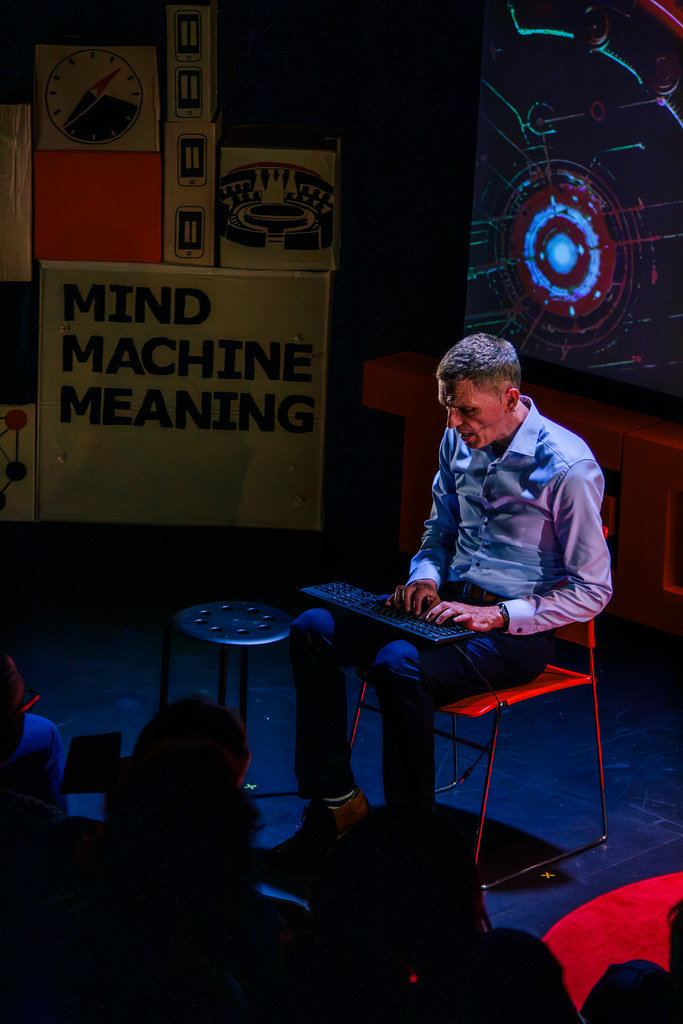
That experience is one of the reasons I now speak in schools and workplaces about using technology more intentionally. In 2026, I even delivered a TEDx talk about spending less time on our phones and more time actually living.
I don't want people to become brilliant at social media but rubbish at life.
That's really what the title of the book is about.
How does Mark Saxby actually make a book, from first instinct to finished draft?
Mark Saxby's two books were made in completely different ways: the children's novel was written in chaotic bursts over nineteen years, while the social media book was built methodically from themes, client stories, and ideas already tested in front of live audiences.
The two books developed in completely different ways.
With The Last Chocolate Bar in the World, I'd disappear to a coffee shop for the day and write until my eyes hurt. A lot of the sequences, characters and plot twists emerged as I went.
The problem was that I wrote in fits and starts.
I had the original idea 19 years before the novel was finally published. In between came starting a business, starting a charity and raising three children. There were whole years when I barely touched the manuscript.
Then, in 2024, I asked my daughter whether she'd finish the book for me if I got old and died before completing it.
She replied that I was already old.
That was strangely motivational.
I decided I really did need to finish it.
With How to Get Results on Social Media Without It Taking Over Your Life, I was far more structured. I'd learnt from the rather chaotic way I'd written the children's novel.
I broke the book into themes and drew on years of professional experience, client stories, workshops, mistakes and ideas that I'd already tested in front of audiences.
The difficult part wasn't finding enough to say. It was deciding what deserved to stay.
I also set myself two challenges. I wanted it to be different from the thousands of other books about social media, and I wanted it to remain useful even as platforms and features changed.
I think I've managed both.
What does Mark Saxby think readers most often miss in his books?
Mark Saxby is relaxed about readers missing the deeper themes in his children's novel, but says he would be genuinely concerned if readers of his social media book chased performance and overlooked the second half of its title.
The lovely thing about The Last Chocolate Bar in the World is that I'm not sure there is a point they have to get.
Primarily, it's a funny adventure about two children, Armitage and Ruby, trying to find a mysterious chocolate bar in a rather upside-down world.
There are themes about courage, confidence, truth and making difficult choices. But if a child misses every one of those and simply has a fantastic time reading the story, I'm completely happy with that.
Older children are perhaps more likely to spot some of those layers. And I love it when parents read the novel with their children because it creates opportunities to talk about those things together.
With How to Get Results on Social Media Without It Taking Over Your Life, I'd be slightly more concerned if somebody missed the point.
I'd hate someone to read it, become obsessed with squeezing ever more performance out of social media and completely overlook the second half of the title.
Getting results matters.
But so does having a life.
What is the one thing Mark Saxby's books approach but never quite say directly?
Mark Saxby says the message running through both books is the same: don't let the world around you automatically decide how you live, whether that pressure comes from fear and social expectation or from the attention-competing design of social media platforms.
Don't let the world around you automatically decide how you live.
In The Last Chocolate Bar in the World, Armitage has to decide whether fear, expectations and the behaviour of everyone around him are going to determine what he does, or whether he's going to make his own choices.
In How to Get Results on Social Media Without It Taking Over Your Life, the context is completely different but the principle isn't.
Social media platforms are extremely good at competing for our attention.
We don't have to give it to them.
We can decide how we use these tools, what we allow them to influence and how much of our lives we're prepared to hand over.
What is Mark Saxby's one goal for the next twelve months?
Mark Saxby's stated goal for the next twelve months is for How to Get Results on Social Media Without It Taking Over Your Life to be published and to produce measurable, real-world results for its readers.
I want How to Get Results on Social Media Without It Taking Over Your Life to be published and making a genuine difference.
Whenever I read a business book, I want clear takeaways. I want to underline things. I want ideas I can actually do something with.
That's how I've tried to write this book, full of practical value, but also full of challenge.
So when you come back to me in a year's time, I don't just want to say that people have bought it.
I want to be able to tell you that readers are getting better results from social media, while spending less of their lives on it.
Thank you so much for sharing your story with us, Mark!
Frequently Asked Questions about Mark Saxby
What is Mark Saxby's background before becoming an author?
Having trained as a journalist and spent more than a decade working for the BBC as a reporter and news editor, I came to writing books from a career built entirely around storytelling. Before journalism, I had wanted to be an author since the age of nine, that ambition simply took a long detour through newspapers, magazines, radio, and television. I founded a specialist social media consultancy in 2011, and today I work as a professional speaker and social media consultant alongside my writing. Every part of that path, the newsroom deadlines, the client workshops, the school talks, feeds directly into how I tell stories and why I tell them.
What is Mark Saxby's children's novel about?
As a former BBC journalist who spent years working with narrative under pressure, I wanted my debut novel to be, first and foremost, a funny adventure, not a lesson with a story bolted on. The Last Chocolate Bar in the World follows two children, Armitage and Ruby, as they try to find a mysterious chocolate bar in a rather upside-down world. Running through the adventure are themes of courage, confidence, truth and making difficult choices, though younger readers who simply enjoy the ride are as welcome as older ones who catch the deeper layers. The book is primarily written for eight to eleven-year-olds, but plenty of adults have enjoyed it too, often noticing ideas and jokes that younger readers might miss.
What is Mark Saxby's social media book about, and who is it for?
After founding my social media consultancy in 2011, I learned, often the hard way, that social media can take over your life just as easily as it can build your business, and my book addresses both sides of that reality. How to Get Results on Social Media Without It Taking Over Your Life is built from years of professional experience, client stories, workshops, and ideas I've already tested in front of live audiences. I wanted it to be full of practical value and clear takeaways, the kind of book where you underline things and can actually do something with what you read. I also wanted it to remain useful even as platforms and features change, which shaped the way I structured the whole thing. The second half of the title matters as much as the first: getting results is important, but so is having a life.
What is Mark Saxby's core message about social media and attention?
Having spent years watching social media consume far more of my own time than I ever intended, my core message is simple: we don't have to give these platforms our attention just because they are designed to demand it. Social media platforms are extremely good at competing for our attention, but we can decide how we use these tools, what we allow them to influence, and how much of our lives we're prepared to hand over. That belief led me to deliver a TEDx talk in 2026 about spending less time on our phones and more time actually living. I speak in schools and workplaces about using technology more intentionally, because I don't want people to become brilliant at social media but rubbish at life. The goal is better results online and a fuller life offline, both at once.
What is Mark Saxby's approach to the process of writing a book?
As someone who spent nineteen years writing a children's novel in fits and starts, while also starting a business, a charity, and raising three children, I learned that process matters enormously and that chaos has real costs. With my first book I would disappear to a coffee shop and write until my eyes hurt, letting characters and plot twists emerge as I went, but there were whole years when I barely touched the manuscript. By the time I came to write my social media book, I was far more structured: I broke it into themes and drew on material I had already tested in front of audiences, and the hardest part was deciding what deserved to stay rather than finding enough to say. The moment that finally pushed me to finish the novel came in 2024, when I asked my daughter whether she'd complete it if I died before doing so, and she told me I was already old. That was strangely motivational.
What is the single idea that connects both of Mark Saxby's books?
Across both a children's adventure novel and a practical business book about social media, the principle running through my work is the same: don't let the world around you automatically decide how you live. In The Last Chocolate Bar in the World, the character Armitage must choose whether fear, expectations, and the behaviour of everyone around him will determine what he does, or whether he will make his own choices. In How to Get Results on Social Media Without It Taking Over Your Life, the context is entirely different but the principle is not: the platforms are competing for our attention, and we get to decide how much of it we give. I came to that theme not through theory but through lived experience, as someone who has worked in media his whole career and watched, up close, how easily attention can be captured and redirected. Making deliberate choices about how you live, online and off, is the thread that ties everything I write and speak about together.