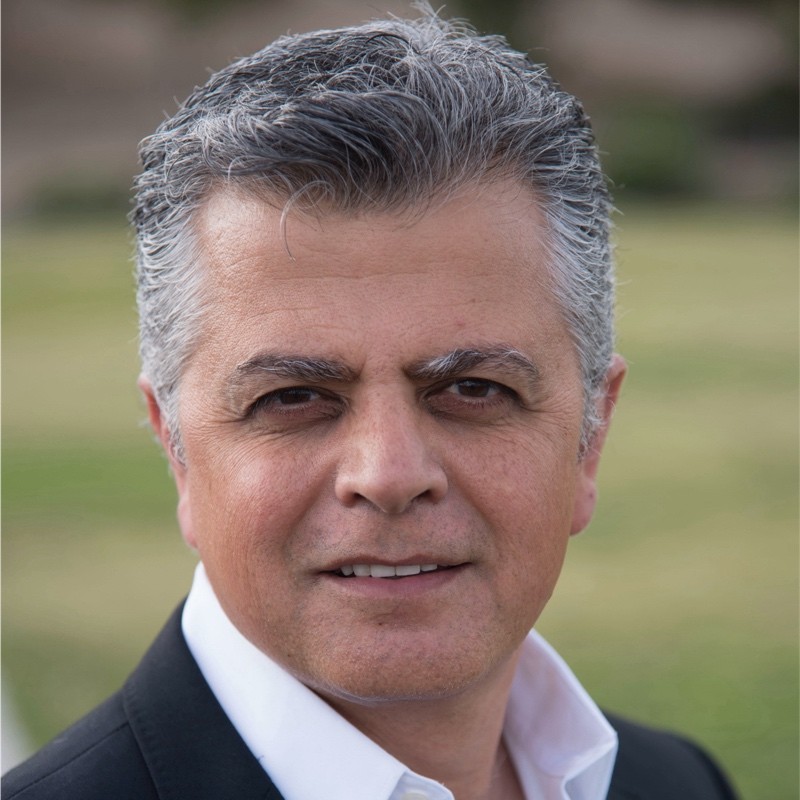
Shahriar Afshar
Shahriar Afshar is the CEO and Founder of Autism Innovation Lab, dedicated to moving real innovations in autism care from research into the real world. After 25 years in government, he walked away from job security to build something on his own terms. His core conviction is that what you build in yourself, not any title or institution, is what lasts.
From two decades inside government institutions to the founding of a startup ecosystem built around one of the most underserved communities in healthcare, Shahriar Afshar's path defies easy categorization. In this interview with Powerful Blueprints, Shahriar talks candidly about the courage it takes to bet on yourself, the framework he uses to evaluate every risk he takes, and what it actually means to build something that matters beyond a press release or a partnership announcement. Some conversations are worth publishing in full. This one with Shahriar is one of them.
What is the first thing a founder should know that no professor ever teaches?
This is the part most people skip.
The first thing I would tell them is: don't wait for permission, and don't wait until you feel ready.
College teaches you how to prepare for opportunities. Building something teaches you how to create them.
If you want to build something real, start with a real problem that matters to you and get close to the people experiencing it. Then start building before you have all the answers. Talk to people. Test your assumptions. Find partners. Ask for help. Make mistakes. Adjust. Keep moving.
I spent much of my career working inside large institutions, including government, the private sector and nonprofits. What I eventually learned is that credentials, titles and organizational charts can give you authority, but they don't necessarily create impact. Impact comes from seeing something that needs to exist and taking responsibility for making it happen.
That is especially true for young people today. You don't need to wait ten or twenty years to become an expert before you can contribute. You can start a company, organize a community, conduct research, build technology, raise money or solve a problem while you are still learning.
So I would tell that student: use college as a platform, not a waiting room. Find a problem worth spending years on, surround yourself with people who know things you don't, and start building something now. Your first idea probably won't be your best one, but the experience of actually building will teach you things no classroom ever can.
What is the hardest sacrifice you made for your career, and was it worth it?
We wanted the honest version, not the tidy one.
The hardest thing I gave up was job security. And yes, it was 100% worth it.
I spent 25 years in government. There was a pension, stability, predictable advancement and, at the time, a realistic path to homeownership. Walking away from that kind of security isn't easy.
But the world I entered at 18 is almost unrecognizable today. The personal computer was just arriving. Then came operating systems, the internet, mobile technology, social media, cloud computing and now artificial intelligence. Each wave created opportunities that would have been almost impossible to imagine a few years earlier.
AI may be the biggest frontier yet.
So I look at young people today and wonder: if you are a creative person, an entrepreneur or simply someone who sees the world differently, why spend your entire life trying to fit yourself into somebody else's box when the tools to build something on your own terms have never been more powerful or accessible?
The old bargain has changed anyway. Job security is increasingly an illusion. Pensions are rare. Housing is far less affordable. Technology is transforming entire professions. So waiting for a company or institution to provide the security previous generations were promised may itself be the bigger risk.
That doesn't mean everyone should quit their job and become an entrepreneur. There are extraordinary careers built around service, science, education, medicine, public institutions and countless other missions. But whatever path you choose, I think you should be building toward something that belongs to you: your expertise, your relationships, your reputation, your ideas, your mission or eventually your own enterprise.
A job can end. A title can disappear. An industry can change.
What you build in yourself goes with you.
Giving up job security forced me to stop thinking about what position I could hold and start thinking about what I could create. For me, that trade was absolutely worth it.
What is the one goal Shahriar should be held accountable to one year from now?
This answer stayed with us.
One year from now, hold me accountable for this: Did we build something that measurably improved the lives of people with autism and their families?
I founded Autism Innovation Lab because I believe we have enough conferences, conversations and good intentions. What we need now is execution.
Over the next year, I want to help move real innovations out of PowerPoints, laboratories and early-stage companies and into the real world. We are already working with startups and initiatives including CliniScripts, BioMEMS, AutismIR, Gheorg and ACE Global Health, across areas such as AI-enabled healthcare, biomarkers, diagnostics, autism screening, digital tools and expanded access to care.
But startups alone are not enough. A major part of the next year will be building the strategic partnerships around them that can accelerate their impact: universities and researchers, health systems and clinicians, technology companies, investors, government, nonprofits, employers and the autism community itself. I want AIL to become a bridge between people developing promising innovations and the institutions, capital, expertise and communities necessary to bring them into the real world.
I don't want to measure the year by meetings, press releases, partnerships announced or ideas discussed. I want to measure it by what actually happened: innovations advanced, pilots launched, research supported, capital attracted, strategic partnerships built and, most importantly, solutions that reached people.
So when you call me a year from now, ask me one question:
"What exists today that didn't exist a year ago because you decided to build it?"
If I can't point to something meaningful, measurable and real, hold me accountable. But don't expect me to give up. That will never happen.
What gets your blood moving and your head clear when the pressure builds?
Here is where Shahriar slowed down.
I'm a special-needs dad with responsibilities that really are 24/7, so finding time for a workout isn't always easy. I lift weights when I can, but soccer has always been my reset.
There is something about the bonding and camaraderie of playing soccer that I find incredibly peaceful. It may be the only time when I don't think, overthink, plan or worry about anything else. For an hour or two, I'm completely present. The brain needs a chance to reset, and that's how I reset mine.
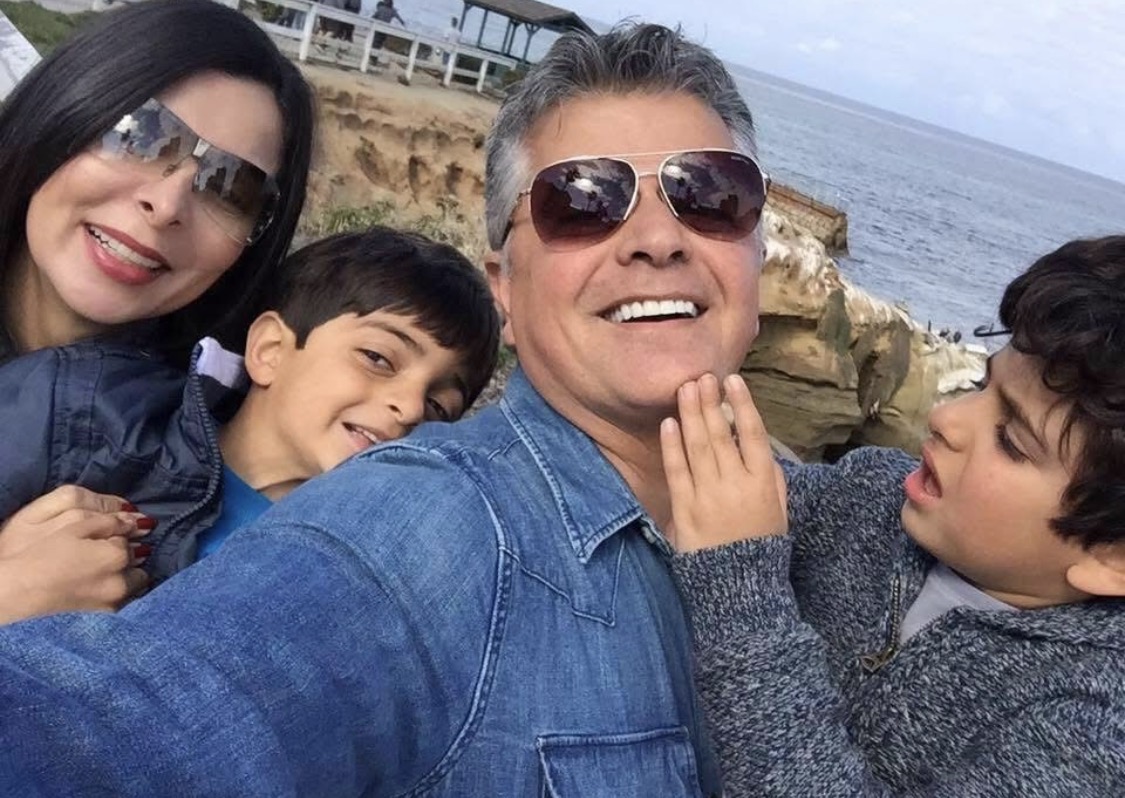
I've played most of my life, although my body doesn't let me play as often as I would like anymore. And as we've gotten older, we seem to spend a little more time arguing and a little less time passing and running.
I guess that goes with the territory.
But I keep going back. Give me a soccer ball, some friends and a field, and for a little while, everything else disappears.
What lessons took the longest to actually stick?
This is where the real thinking showed up.
Believing in myself.
That probably took me the longest to learn. Not confidence in the superficial sense, but having the courage of my convictions and trusting myself enough to act, even when other people don't necessarily see what I see.
I don't know a single successful person who has made a meaningful impact who hasn't failed, usually more than once. Failure isn't the opposite of success. It's part of getting there. Take the risk. If it works, build on it. If it doesn't, learn from it, adjust and don't miss a beat.
The bigger failure is being so afraid of getting something wrong that you never give yourself the opportunity to get something right.
I also try to look at the decisions I make through what I call the Three ROIs: Return on Investment, Return on Involvement and Return on Inclusion.
Return on Investment asks whether something is worth the resources you put into it. Return on Involvement asks whether your time, energy and participation actually make a difference. And Return on Inclusion asks who benefits, who gets brought into the opportunity and whether what you are building creates value beyond yourself.
That framework has helped me become more comfortable taking risks. Not everything has to succeed financially to have been worthwhile. Sometimes the return is what you learned, the people you brought together, the opportunity you created for someone else or the impact you had along the way.
So the lesson that took me the longest was this: believe in yourself enough to take the risk, have the courage of your convictions, be humble enough to learn when you're wrong, and resilient enough to keep moving when you fail.
I wish I had learned that much earlier but here is another lesson, I never ever hold on to an ounce of regret.
Onward and upward!
Thank you so much for sharing your story with us, Shahriar.
Frequently Asked Questions about Shahriar Afshar
What is Shahriar Afshar's mission with Autism Innovation Lab?
As the founder of Autism Innovation Lab, my mission is straightforward: stop talking and start executing. I believe the autism community already has enough conferences and good intentions. What it needs is for promising innovations to move out of laboratories and PowerPoints and into the real world, into the hands of people who actually need them. We are working with startups across AI-enabled healthcare, biomarkers, diagnostics, and digital tools, while building the strategic partnerships with universities, health systems, investors, and government that can accelerate their impact. My measure of success is not meetings or press releases. It is what actually changed in people's lives.
What is Shahriar Afshar's framework for evaluating risk and decision-making?
Over years of building across government, nonprofits, and the private sector, I developed what I call the Three ROIs: Return on Investment, Return on Involvement, and Return on Inclusion. Return on Investment asks whether something is worth the resources I put into it. Return on Involvement asks whether my time and participation actually make a meaningful difference. Return on Inclusion asks who benefits and whether what I am building creates value beyond myself. This framework has made me far more comfortable taking risks, because it reminds me that not everything has to succeed financially to have been worthwhile. The return is sometimes what you learned or the opportunity you created for someone else.
Why did Shahriar Afshar walk away from a government career after 25 years?
After spending 25 years in government, I walked away from a pension, predictable advancement, and what felt at the time like a realistic path to homeownership. The core reason was that I came to believe the old bargain had fundamentally changed: job security is increasingly an illusion, pensions are rare, and technology is transforming entire professions. I also realized that credentials and organizational charts can give you authority, but they don't necessarily create impact. Impact comes from seeing something that needs to exist and taking responsibility for making it happen. Leaving forced me to stop thinking about what position I could hold and start thinking about what I could create.
What advice does Shahriar Afshar give to young people who want to build something real?
The advice I give consistently is this: don't wait for permission, and don't wait until you feel ready. College teaches you how to prepare for opportunities, but building something teaches you how to create them. Start with a real problem that matters to you, get close to the people experiencing it, and begin building before you have all the answers. Your first idea probably won't be your best one, but the experience of actually building will teach you things no classroom ever can. Use college as a platform, not a waiting room.
What is Shahriar Afshar's personal approach to mental reset and physical wellbeing?
As a special-needs dad with responsibilities that are genuinely around the clock, carving out time for a workout is not always straightforward. I lift weights when I can, but soccer has always been my real reset. There is something about the camaraderie of playing that I find incredibly peaceful, and it may be the only time when I am not thinking, overthinking, or worrying about anything else. For an hour or two on the field, I am completely present. My body does not let me play as often as I would like anymore, but I keep going back because when I have a ball, some friends, and a field, everything else disappears for a while.
What is the hardest personal lesson Shahriar Afshar has had to learn through his career?
The lesson that took me the longest to learn was believing in myself, not in a superficial way, but having the courage of my convictions and trusting myself enough to act even when others don't see what I see. I don't know a single person who has made a meaningful impact without failing, usually more than once, and I had to internalize that failure is not the opposite of success but part of getting there. The bigger failure, I eventually understood, is being so afraid of getting something wrong that you never give yourself the opportunity to get something right. I also learned to carry zero regret: I wish I had learned self-belief much earlier, but holding on to that regret would cost me something I am not willing to give. Onward and upward.