
Yvan Goudard
Yvan Goudard is the author of Startup dot Comms, the communication blueprint for startups. His core argument is that unclear communication is rarely harmless — it wastes time, weakens trust, and hides problems that should have been addressed earlier. For Yvan, communication is not decoration or a department; it is the operating system through which a company exchanges information and earns trust.
From pitch events and demo days across Southeast Asia to the quiet discipline of a morning with coffee and a laptop, Yvan Goudard's work sits at the intersection of observation and usefulness. In this interview with Powerful Blueprints, Yvan talks candidly about the curiosity behind the writing, the patterns that frustrated him into authorship, and why the most consequential communication failures happen not on stage, but in the ordinary, daily exchange of information inside a startup. Good morning, Yvan!
Check his book on Amazon: https://www.amazon.com/Startup-Dot-Comms-Communication-Blueprint-ebook/dp/B0DJYG1267

When did Yvan Goudard first realize he was a writer?
Yvan did not arrive at a single defining moment, but gradually recognized that writing had become his default response to experience — the bridge between what he learns and how he helps others learn from it.
I never really had a single moment where I thought, "I am a writer."
For a long time, I did not consider myself one at all. Writing was simply the way I processed what I was learning and shared it with others. When I came across an idea, a lesson, a mistake, or a pattern that felt useful, my instinct was to write it down, make sense of it, and pass it on.

Over time, I realized that this was not just a habit. It was the way I naturally communicate.
I think the realization came when I noticed that writing had become my default response to experience. If I learned something from working with a founder, attending a startup event, studying a company, or reflecting on my own journey, I felt the need to turn it into something useful for someone else.
That is when I understood that being a writer was not necessarily about choosing a title. It was about having a constant urge to clarify, organize, and share ideas.
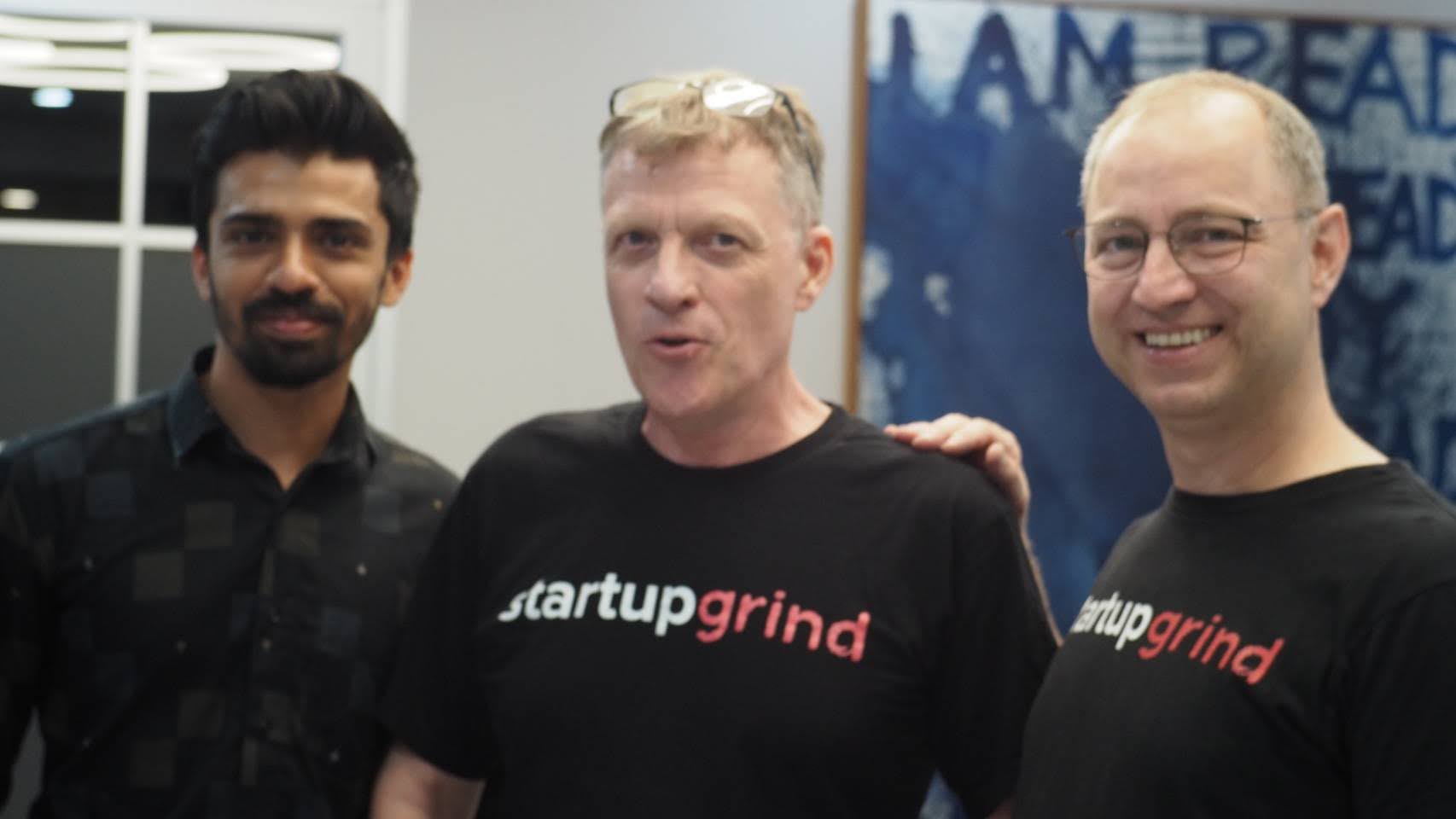
So I did not become a writer in the traditional sense. I slowly realized I already was one, because writing had become the bridge between what I learn and how I help others learn from it too.
What was Yvan Goudard really trying to work out when he wrote Startup dot Comms?
Yvan wrote Startup dot Comms to address a pattern he kept seeing at pitch events and demo days: founders with strong technical skills and real ambition who repeatedly struggled to explain what they were building in a clear, simple, and convincing way.
What I was really trying to work out was why so many promising startups were making the same basic communication mistakes.
I had attended many pitch events, demo days, startup panels, and founder presentations. Over time, I started seeing the same patterns again and again. Founders had interesting ideas, strong technical skills, and real ambition, but they often struggled to explain what they were building in a way that was clear, simple, and convincing.
At first, I found it surprising. Some of the issues felt obvious to me: unclear messaging, confusing pitch decks, weak positioning, too much jargon, no clear audience, no simple answer to "why this matters." But then I realized that what feels like common sense to one person is often just the result of their own experience.
Everyone comes to startups with different skills. Some founders are engineers. Some are product people. Some are operators. Some are first-time entrepreneurs trying to figure things out as they go. Communication may look simple from the outside, but it is a skill like any other.
So the real reason I wrote Startup dot Comms was not to produce a grand theory about branding or PR. I wanted to create something practical, direct, and usable. No fluff. No abstract advice. No pretending that every startup needs a big agency strategy from day one.
I wanted to help founders get the basics right: explain what they do, who they serve, why it matters, and why anyone should care.
That was the real problem I was trying to solve.
What is Yvan Goudard's one-year goal?
Yvan's stated goal for the next twelve months is to build Branch Out into a consistent and useful podcast about communication in Southeast Asia.
One year from now, I would like to be held accountable for building Branch Out into a consistent and useful podcast about communication in Southeast Asia.
For me, the podcast is a natural complement to Startup dot Comms. The book gives founders and communicators a strong foundation. It is structured, practical, and easy to return to when they need to think through the basics: messaging, positioning, storytelling, credibility, and trust.
A podcast serves a different purpose. It allows me to explore more specific ideas, examples, trends, and conversations in a format that is easier to access in daily life. You can listen while driving, walking, cooking, or even taking a shower. That matters because useful ideas should not only live in books, reports, or long articles. They should meet people where they are.
With Branch Out, I want to look at how communication actually works across Southeast Asia: how founders tell their stories, how brands build trust, how cultures shape messaging, and how ideas travel across markets.
The goal is not just to launch the podcast. The real goal is to keep showing up, episode after episode, and build it into a resource that founders, communicators, and curious listeners can use to better understand the region.
Take a listen at the podcast on Spotify: https://open.spotify.com/show/4DWZtB2QNtrjUpfsUAS4JW
What does Yvan Goudard's writing environment look like before the first word is written?
Yvan begins his writing sessions by settling his mind first — sitting at his table with a coffee nearby, reviewing notes and fragments before attempting a single sentence.
Before I write anything, the first hour is mostly about settling my mind.
I am usually sitting at my table with my laptop open and a coffee nearby. If I am in a large city, there is often some city noise in the background, but I need the immediate space around me to feel calm. I do not need silence, but I do need to feel that I can stay with one idea long enough to understand it properly.
I usually start by looking through notes, fragments, or observations I have collected from conversations, events, or things I have read. At that stage, I am not trying to sound clever. I am trying to find the real point. What is the useful thing here? What did I actually learn? Why would this matter to someone else?
The environment has to allow for that kind of honesty. No rush, no performance, no pressure to make the first sentence beautiful.
The words usually come once I stop trying to "write" and start trying to explain something clearly.
How does Yvan Goudard make a book — from first instinct to finished draft?
Yvan's book-making process begins not at a desk but in the field — attending events, talking to founders, and collecting small observations — before moving through structure, messy drafting, and repeated simplification.
For me, a book starts long before it looks like a book.
It usually begins with a repeated frustration. I notice the same problem again and again, in conversations, events, pitch decks, panels, or founder stories. At first, I just take notes. Small observations. Sentences. Examples. Things people say. Things they do not say clearly enough. Patterns I cannot ignore.
That part looks nothing like writing. It looks like attending events, listening carefully, asking questions, reviewing startup materials, talking to founders, and trying to understand where communication breaks down. A lot of the work happens while walking, thinking, or connecting ideas that did not seem related at first.
Once the pattern becomes clear, I start organizing it. I ask myself: what is the real problem here, and what would be useful to someone trying to solve it? I do not want to write something decorative. I want the structure to be practical. So I break the idea into sections, questions, examples, and simple frameworks.
Then comes the messy draft. I write quickly at first, without trying to make every sentence perfect. The goal is to get the substance out. After that, the real work begins: cutting, simplifying, moving things around, removing anything that sounds clever but does not help the reader.
With Startup dot Comms, the process was very much like that. The instinct came from seeing too many startups struggle with the same basic communication mistakes. The book became my attempt to turn those repeated observations into something clear, useful, and easy to return to.
By the time I reach a finished draft, the writing has gone through several stages: observation, frustration, structure, rough explanation, simplification, and refinement. The finished version may look clean, but behind it is a lot of listening, questioning, deleting, and trying to make the idea useful enough to deserve the reader's time.
What surprised Yvan Goudard most while writing Startup dot Comms?
Yvan discovered while writing the book that communication in startups extends far beyond pitches and press coverage — it is the operating system through which a company explains itself, aligns its team, and earns trust, present in every email, update, demo, and internal message.
What surprised me most was how narrowly many people understand communication.
When people hear "startup communication," they often think about pitches, marketing, PR, social media, or press coverage. I understood why, because those are the visible parts. They are the moments where communication becomes public and easy to judge.
But while writing Startup dot Comms, I became more convinced that communication goes much deeper than that.
At its core, communication is the exchange of information. Every time a startup shares information, it is communicating. A pitch deck is communication. A meeting is communication. An investor update is communication. A product demo is communication. A report, an email, a job description, a dashboard, a customer reply, even the way code is documented, all of it sends a message.
That was the part that became clearer to me as I wrote the book. Communication is not a department or a campaign. It is the operating system through which a company explains itself, aligns its team, earns trust, and makes decisions easier for others.
The surprise was realizing that many startups do not fail at communication only when they go on stage or speak to the media. They struggle with it every day, in the ordinary exchange of information between founders, teams, users, investors, partners, and the market.
So the book became less about making startups sound good, and more about helping them share information in a way that is clear, useful, and understood by the people who need it.
What does Startup dot Comms approach but never quite say directly?
Yvan's central unspoken argument is that unclear communication is rarely harmless — that confusion in a startup actively wastes time, damages trust, slows teams, and hides problems, making clarity not a stylistic choice but a responsibility to the people who need to believe in what you are building.
The thing I would say directly is that unclear communication is rarely harmless.
In startups, we often treat confusion as a normal part of building something new. Sometimes it is. But too often, unclear communication wastes people's time, weakens trust, slows teams down, and hides problems that should have been addressed earlier.
A confusing pitch is not just a bad pitch. It may reveal that the founder has not fully understood the customer. A vague website is not just a weak website. It may prevent the right people from seeing the value of the product. A poor investor update is not just an administrative issue. It can damage confidence. A messy internal message can send a team in five different directions.
So if there is one thing Startup dot Comms circles around, it is this: communication is not decoration. It is responsibility.
If you want people to believe in your idea, work with you, invest in you, buy from you, or follow you, then you owe them clarity.
What does Yvan Goudard say gets lost between who he is and how his work is read?
Yvan says readers often mistake the structured, finished quality of his writing for certainty, when in fact most of his work begins with a question he has not fully answered yet — the curiosity and doubt behind it rarely make it onto the page.
Something people almost never get right is that they sometimes read my work as if it comes from certainty.
Because I write about communication, branding, startups, and strategy, people may assume I have a fixed answer for everything. But a lot of my writing actually comes from questioning things. I am often trying to understand why something works, why something fails, or why people keep missing the same point.
I am not writing from a place of "I know better." I am usually writing from a place of "I have seen this pattern enough times that it may be useful to name it."
That distinction matters to me.
What can get lost is the curiosity behind the work. I am not interested in communication as a way to sound polished or impressive. I am interested in it because it reveals how people think, how teams align, how trust is built, and where misunderstandings begin.
So if people only see the finished article, post, or chapter, they may miss the part before it: the listening, the doubt, the frustration, the observation, and the attempt to make sense of something that felt important but not yet clear.
My work may look structured by the time people read it, but it usually starts with a question I have not fully answered yet.
Thank you so much for sharing your story with us, Yvan!
Frequently Asked Questions about Yvan Goudard
Who is Yvan Goudard and what is Startup dot Comms?
As an author and communication strategist based in Southeast Asia, I wrote Startup dot Comms to address a pattern I kept seeing across pitch events, demo days, and founder presentations across the region. The book is a practical communication guide for founders — structured, direct, and built around the basics: messaging, positioning, storytelling, credibility, and trust. It is not a grand theory about branding or PR. My goal was to help founders explain what they do, who they serve, and why it matters, without fluff or abstract advice that assumes every startup needs a big agency strategy from day one.
What is Yvan Goudard's central argument about startup communication?
After attending countless pitch events and studying how startups share information at every level, my central argument is that unclear communication is rarely harmless. Too often, founders treat confusion as an acceptable byproduct of building something new — but a confusing pitch may reveal that the founder has not fully understood the customer, a vague website may prevent the right people from seeing the product's value, and a messy internal message can send a team in five different directions. Communication is not decoration or a department. It is the operating system through which a company explains itself, aligns its team, and earns trust. If you want people to believe in your idea, invest in you, or buy from you, you owe them clarity.
What is Yvan Goudard's writing process and daily routine?
Having built my writing practice through years of observing founders and startups across Southeast Asia, my process begins long before I sit down to write. I start each session at my table with my laptop open and a coffee nearby, spending the first hour settling my mind — reviewing notes, fragments, and observations collected from conversations and events rather than trying to produce a polished opening line. The real writing only comes once I stop trying to "write" and start trying to explain something clearly. A book, for me, begins even earlier than that: with repeated frustration at a pattern I cannot ignore, followed by careful listening, organizing, drafting quickly, and then cutting and simplifying until the idea is useful enough to deserve the reader's time.
What is Yvan Goudard's one-year goal with the Branch Out podcast?
Over the coming twelve months, my goal is to build Branch Out into a consistent and useful podcast about communication in Southeast Asia. The podcast is designed as a natural complement to Startup dot Comms — where the book offers a structured foundation on messaging, positioning, and storytelling, the podcast allows me to explore more specific ideas, trends, and conversations in a format people can access while driving, walking, or cooking. With Branch Out, I want to examine how communication actually works across the region: how founders tell their stories, how brands build trust, how cultures shape messaging, and how ideas travel across markets. The real goal is not simply to launch it, but to keep showing up, episode after episode, and build it into a resource founders and communicators can genuinely rely on.
What does Yvan Goudard say people most misunderstand about his work?
After years of writing about communication, branding, and strategy, the most common misread I encounter is that people assume my work comes from certainty — that because I write about these topics with structure, I must have fixed answers for everything. In reality, most of what I write starts from a question I have not fully answered yet. I am not writing from a place of "I know better." I am writing from a place of "I have seen this pattern enough times that it may be useful to name it." What gets lost in the finished article or chapter is the curiosity behind it: the listening, the doubt, the frustration, and the attempt to make sense of something that felt important but not yet clear. I am interested in communication because it reveals how people think, how teams align, and where misunderstandings begin — not as a way to sound polished.
What did Yvan Goudard discover about communication while writing Startup dot Comms?
While writing the book, the most surprising realization I had was how narrowly most people define startup communication — as pitches, press coverage, social media, and marketing campaigns. What became clearer as I wrote was that communication is present in every single exchange of information a startup makes: a meeting, an investor update, a product demo, an email, a job description, a customer reply, even the way code is documented. Startups do not fail at communication only when they go on stage or speak to the media — they struggle with it every day, in the ordinary information flow between founders, teams, users, investors, and partners. That realization shifted the book away from helping startups sound good, and toward helping them share information in a way that is clear, useful, and understood by the people who need it.